Persistent tooth pain does not automatically mean that the dental pulp is infected or that a root canal is the right treatment. By comparing the pain pattern, urgent warning signs, diagnostic tests, tooth-saving options, and case complexity, you can understand when a general dentist can manage the problem and when an endodontist’s expertise is valuable.
Key takeaways
- Lingering, spontaneous, or night pain needs a dental assessment.
- Pain fading does not prove the infection has cleared.
- X-rays, cold testing, and percussion help identify the responsible tooth.
- An endodontist can help with complex canals, retreatment, or uncertain diagnosis.
What persistent tooth pain can—and cannot—tell you
Brief sensitivity that stops quickly after cold or sweet food is removed fits ordinary dentine sensitivity or reversible pulpitis. Spontaneous pain, lingering hot or cold pain, night pain, or pain that worsens when lying down is more concerning for irreversible pulpitis. Symptoms alone cannot confirm either diagnosis.
| Condition | What it means | Usual treatment direction |
|---|---|---|
| Reversible pulpitis | Inflamed pulp that settles after the trigger is removed | Remove decay or repair the cause; monitor the response |
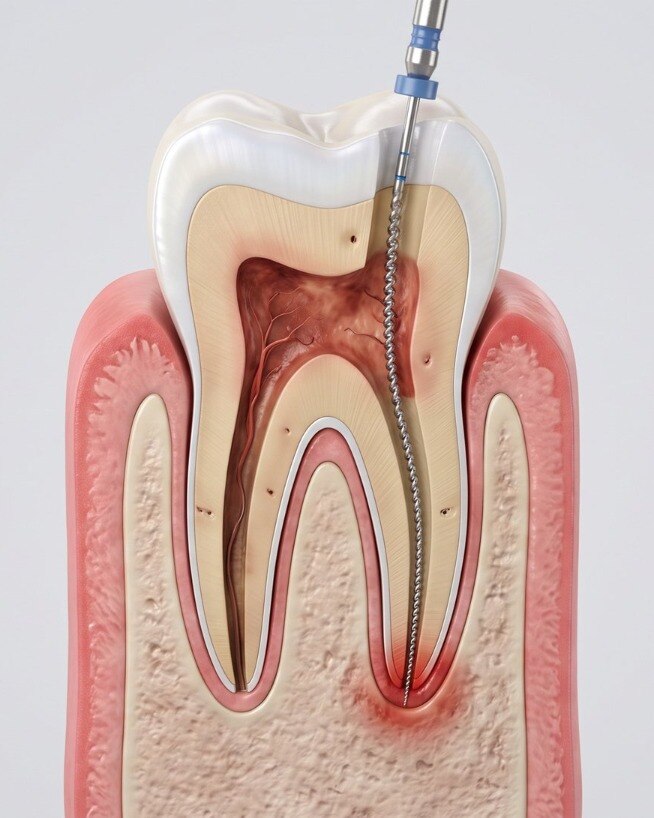
| Irreversible pulpitis | Pulp inflammation unlikely to recover | Consider root canal treatment if the tooth can be saved |
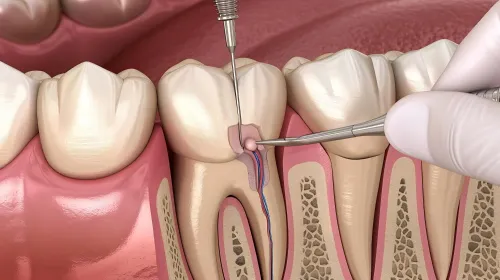
| Pulp necrosis | Loss of pulp vitality after decay or trauma | Treat infected canals with root canal treatment when restorable |
| Abscess | A collection of infection around or beside the tooth, not a diagnosis based only on pain | Drain and treat the source; root canal treatment may be needed |
Other causes can imitate pulp pain. A high filling or traumatic bite hurts on chewing and calls for bite adjustment or restoration replacement. A cracked tooth produces inconsistent sharp pain and can be monitored or repaired when restorable. A gum abscess causes localized swelling and tenderness; periodontal disease needs gum treatment.
Decay may not yet have reached the pulp, while sinus disease or pain referred from another tooth needs its confirmed cause treated. A dental abscess diagnosis requires examination and testing, not pain alone.
When infection needs urgent assessment—even if the pain fades
Pain intensity does not measure infection severity. A dead pulp can stop producing pain while bacteria continue around the root, causing a gum pimple, facial swelling, tenderness to biting, tooth discoloration, or a dark area on a dental X-ray.
Arrange prompt dental assessment if you have:
- Pus, localized swelling, or a recurring gum boil
- Fever, malaise, spreading redness, or worsening pain
Seek emergency care for facial or jaw swelling with difficulty breathing, difficulty swallowing, difficulty speaking, or inability to open your mouth normally. Treat swelling that extends toward the eye or neck, or severe systemic illness, as an emergency rather than a routine dental appointment.
Antibiotics do not remove infected pulp or replace drainage and dental treatment. A dentist generally reserves them for systemic involvement, such as fever or malaise, or when immediate definitive treatment is unavailable. The dentist’s assessment determines whether they are appropriate.
While waiting, do not place aspirin on the gum: it can chemically burn the tissue. Do not puncture a swelling, and do not repeatedly self-medicate with leftover antibiotics. These steps can delay drainage and proper treatment while the infection continues.
How the dentist confirms which tooth is responsible
The dentist confirms the responsible tooth by comparing it with neighbouring and matching teeth, not by relying on pain alone. They ask where the pain begins, what triggers it, and whether it lasts seconds or continues for minutes.
Cold testing or heat testing measures the pulp’s response; an absent or lingering response can point to pulp damage, while an equal response in several teeth raises concern about referred pain.
| Examination finding | What it can suggest |
|---|---|
| Bite testing on individual cusps | A cracked tooth or traumatic contact from a high filling |
| Percussion test on the tooth and neighbours | Inflammation around a root |
| Narrow, deep gum pocket | A crack extending down the root or a periodontal defect |
| Swelling, pus, discolouration, decay, or defective restoration | Infection, pulp death, or another local cause |
The dentist also examines cracks, restorations, tooth colour, swelling, and whether a rubber dam can isolate the tooth. A periapical X-ray shows the entire root and surrounding bone, helping reveal bone changes, root shape, previous treatment, or an abscess. Early pulp inflammation can still produce a normal X-ray.
When findings conflict, the dentist may repeat testing or take additional angled radiographs. Specialist imaging may be needed when the anatomy or diagnosis remains unclear. The diagnosis—not persistent pain alone—determines whether the tooth needs treatment, monitoring, repair, or referral.
When an endodontist is more useful than a routine root canal appointment
An endodontist is a dentist with additional postgraduate training in diseases and injuries of the dental pulp and tissues around the roots. An endodontist referral is not required for every root canal; general dentists commonly treat straightforward primary cases. Referral becomes especially useful when:
- Canals are calcified or unusually narrow, or access is limited
- Roots are severely curved, or the internal anatomy is unclear
- The diagnosis remains uncertain
- Root canal retreatment is needed after earlier treatment
- A separated instrument, perforation, resorption, or traumatic dental injury is present
- A vertical root fracture is suspected, or endodontic microsurgery may be needed
Specialist care can add magnification, specialist imaging when indicated, rubber-dam isolation, canal-location techniques, and methods for managing complications. These tools improve assessment and access, but they do not guarantee that the tooth can be saved.
Persistent symptoms after treatment do not automatically mean extraction. Missed anatomy, leakage under a restoration, new decay, a fracture, infection outside the canal, or a non-endodontic pain source can explain ongoing discomfort.
Depending on the cause, evaluation may lead to:
- Observation
- Nonsurgical retreatment
- Apical surgery
- Restoration repair
- Extraction
A specialist consultation is most valuable when the tooth’s restorability or prognosis is uncertain. It helps determine whether the tooth can be sealed and restored, whether a crack or periodontal problem is present, and whether retreatment or surgery offers a reasonable benefit.
How to weigh saving the tooth against extraction and replacement
Choose root canal treatment when enough sound tooth structure remains for a predictable seal and restoration. Choose extraction when the tooth cannot support a durable restoration or its prognosis is poorer than replacement.
| Option | What it involves | Main trade-offs |
|---|---|---|
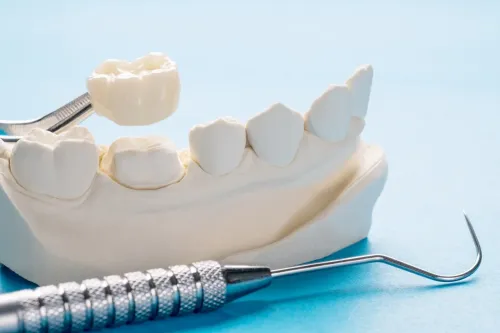
| Root canal treatment | Removes infected pulp, then uses a temporary filling followed by a definitive crown or other well-sealed restoration when indicated | Preserves the natural tooth, but requires restoration, follow-up, and protection from fracture |
| Extraction | Removes the tooth, then allows healing before a dental implant, dental bridge, or removable replacement | Removes the damaged tooth, but adds healing time, replacement decisions, maintenance, and treatment of neighbouring or supporting tissues |
Extraction may be more predictable when a crack extends below the gum line, a vertical root fracture is present, supporting bone is severely lost, or too little tooth remains for reliable isolation and restoration.
Ask your dentist or endodontist:
- How many appointments will each option require?
- How long will healing take before a replacement?
- Does the remaining tooth structure support a crown or other sealed restoration?
- Are the gums and supporting bone healthy enough for the proposed plan?
- What maintenance will the restoration or replacement require?
A root canal is not the final restoration. Avoid hard chewing on a tooth with a temporary filling, follow bite-adjustment instructions, and contact the dentist for worsening pain, swelling, or an uneven bite.
PRYSM DENTAL STUDIO can help arrange the assessment needed to decide between routine care, specialist referral, restoration, or extraction based on the tooth’s actual condition.
Related service
Best Root Canal Treatment Specialist in Deccan Gymkhana, Shivajinagar, Pune | Prysm Dental Studio by Dr. View service → |
Frequently asked questions
What can persistent tooth pain indicate?
Spontaneous pain, lingering hot or cold pain, night pain, and pain worse when lying down can indicate irreversible pulpitis, but symptoms alone cannot confirm the diagnosis.
Does tooth pain fading mean the infection is gone?
No. Pain can fade when the pulp dies while infection continues, so swelling, fever, a bad taste, or facial tenderness needs prompt assessment.
How does a dentist identify which tooth is causing pain?
The dentist compares cold or electric pulp tests, tapping, biting tests, gum examination, dental X-rays, and your symptom pattern across nearby teeth.
When is an endodontist more useful than a routine root canal appointment?
An endodontist is especially useful for difficult canal anatomy, a previously treated tooth, persistent symptoms after treatment, calcified canals, or an uncertain diagnosis.