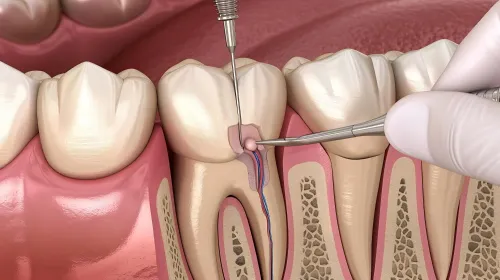
A missing tooth changes more than the appearance of your smile: it can reduce the chewing surface, let nearby teeth drift and trap food around the gap. Understanding bridge anatomy, support requirements, design choices, treatment steps and maintenance will help you judge whether a bridge can improve function safely in your situation.
Key takeaways
- A pontic fills the gap while abutment teeth anchor the bridge.
- Choose the design based on gap location, length, and supporting teeth.
- Healthy gums and strong supporting teeth are essential before fitting.
- Clean beneath the pontic daily and attend scheduled dental checks.
How a bridge transfers chewing force
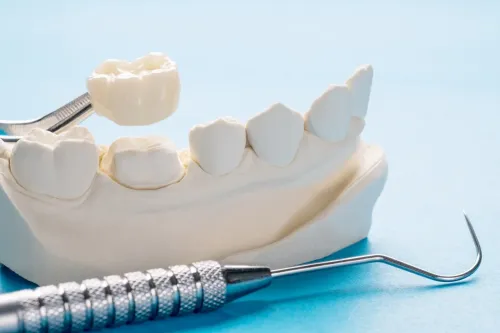
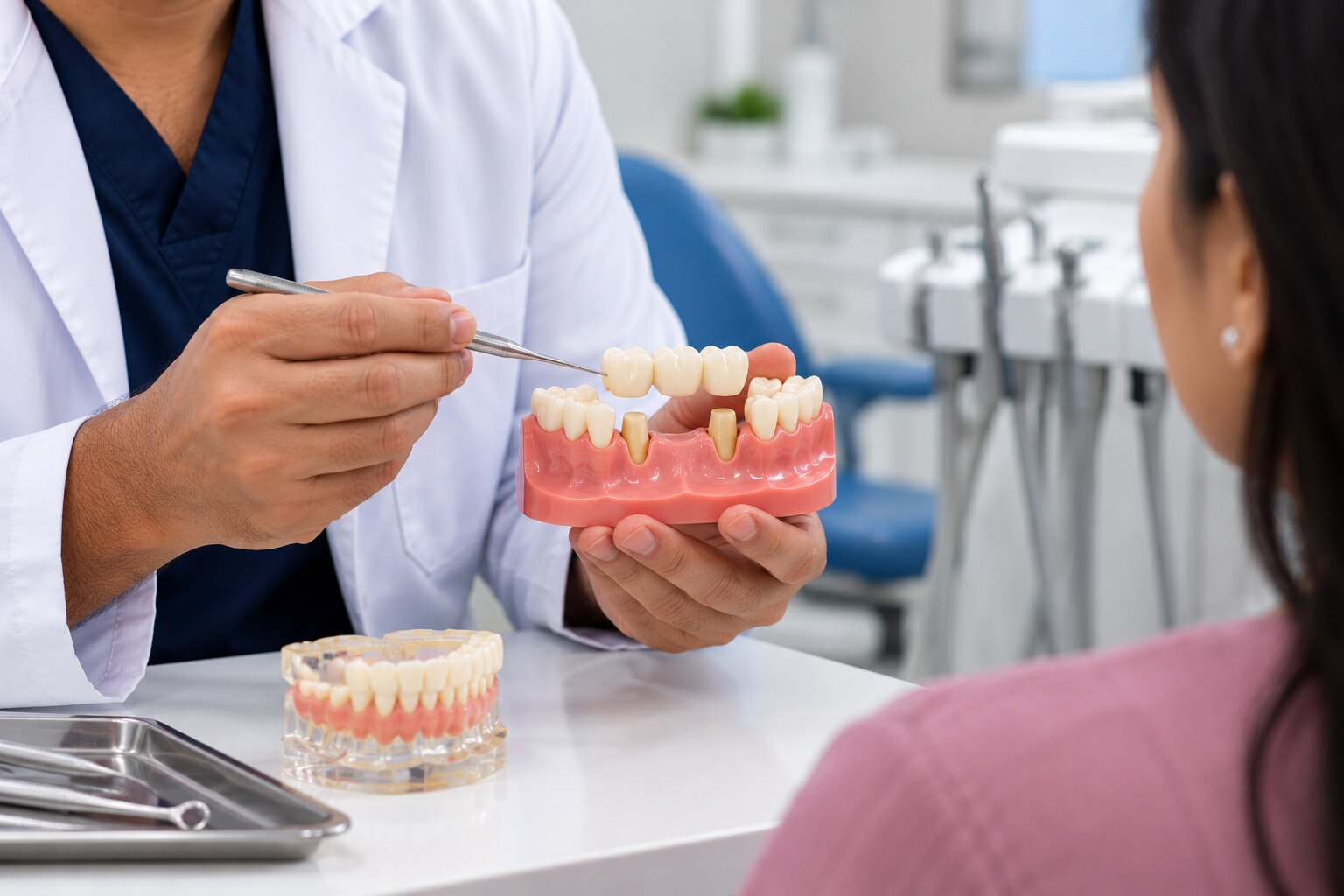
The pontic is the artificial tooth that occupies the gap and restores a chewing surface. Dental bridge anatomy also includes the supports that keep it from shifting:
- Pontic: the replacement tooth suspended over the missing-tooth space.
- Abutment teeth: the natural teeth on either side of the gap that carry the load.
- Retainers or crowns: the portions fitted over the abutment teeth and joined to the pontic by connectors.
In a fixed conventional bridge, the retainers or crowns are cemented onto prepared abutment teeth. You cannot remove this bridge like a partial denture. The dentist must reshape those supporting teeth, which permanently removes some tooth structure.
When you bite, the opposing tooth presses against the pontic. That force travels through the pontic and connectors into the retainers, then through the abutment teeth and their roots into the surrounding bone and periodontal ligaments. The bridge therefore replaces the missing tooth’s chewing surface but does not recreate its root or natural sensory feedback.
A bridge can make chewing more efficient than leaving a gap, yet it does not tolerate unlimited force. Improvement depends on the gap’s position, the number of missing teeth, the opposing teeth, your bite and the strength of the abutments.
A high bite, movement, pain or food trapping after fitting needs dental review rather than simple adjustment by chewing on it.
Choosing the bridge design for the gap
The gap’s position, bite force, available support and willingness to undergo tooth preparation or surgery determine the suitable design. Compare the options before choosing the most natural-looking one.
| Option | What it means | When it fits |
|---|---|---|
| Conventional bridge | A pontic is joined to crowns covering abutment teeth on both sides of the gap. Supporting teeth must be reshaped permanently. | A stable choice when healthy, strong teeth border the space and can carry the chewing load. |
| Cantilever bridge | The pontic is attached to an abutment on one side only, creating greater leverage on that tooth. | Selected cautiously for low-load areas, such as certain front-tooth gaps; it is generally unsuitable for heavily loaded back teeth. |
| Maryland bridge | Also called a resin-bonded bridge, it uses metal or ceramic wings bonded to the backs of neighbouring teeth. It requires little tooth reduction. | Often considered for a single front tooth when enamel, bite and spacing allow. Debonding is a recognised failure. |
| Implant-supported bridge | Pontics are supported by dental implants rather than natural teeth, so neighbouring teeth need not be cut down. | Useful when several adjacent teeth are missing and implant surgery, bone support, healing time and oral health are acceptable. |
The final decision weighs preparation, surgery, cleaning access, expected loading, treatment time and cost. An implant-supported design is not automatically better: an implant may need grafting or months of healing, while a conventional bridge sacrifices healthy enamel.
A removable partial denture or leaving the space unreplaced can also be reasonable when the risks outweigh the chewing benefit.
Who can safely support a bridge?
Bridge candidacy requires healthy abutment teeth, stable gums, a manageable bite and a gap with enough room for the planned pontic. The assessment should show that the supports can carry bite forces without becoming loose, painful or overloaded.
1. Check each abutment tooth for untreated decay, cracks, infection and sufficient remaining tooth structure. Its roots and surrounding bone must provide adequate support, and its crown must be tall and sound enough to retain a crown. Short, heavily restored teeth may not hold a conventional bridge securely.
2. Check the gums and bone for inflammation, bleeding, pockets and mobility. Active gum disease must be treated first; placing a bridge over unstable foundations can lead to recurrent decay, loss of retention or further bone loss. Good plaque control is part of candidacy.
3. Examine the bite, including the opposing teeth, grinding habits and the direction of bite forces. A cantilever design deserves particular caution because one-sided support increases leverage, especially near back teeth.
4. Measure the missing-tooth space and confirm its number and position. The gap needs enough vertical and horizontal room for a cleanable pontic, while neighboring teeth must offer a practical path of insertion. If a conventional bridge would require extensive irreversible removal of healthy enamel, another design may better protect the remaining teeth.
What happens during examination and bridge fitting
The dentist first checks the proposed abutment teeth, missing-tooth space and opposing teeth. Dental X-rays reveal decay, bone support, root shape and hidden infection; a gum assessment looks for bleeding, pockets and looseness; bite analysis shows where chewing force lands and whether the bridge design will overload a support.
- Examination: Expect an inspection of enamel, fillings, cracks, tooth length, gum health and plaque control. The dentist also checks the path the bridge must follow and whether neighboring teeth have drifted into the gap.
- Preparation: For a conventional bridge, tooth preparation for a bridge reshapes the abutment teeth so crowns can fit over them. This permanently removes tooth structure. Local anaesthetic keeps the procedure comfortable, and a temporary bridge protects the prepared teeth while the laboratory makes the final restoration.
- Records: The dentist takes an impression or digital scan, records your bite and selects the bridge shade when appearance matters. Tell the dentist if the temporary bridge feels high, loose or painful.
- Try-in: The finished bridge is placed without permanent cement to check its fit, contact with neighboring teeth, gum position, appearance and bite. Adjustments are easier before cementation.
- Final cementation: After you approve the fit, the dentist cleans and dries the surfaces, applies dental cement and seats the bridge. Excess cement is removed, and the bite is checked again.
Mild tenderness or sensitivity can occur as you adapt, but a high bite, food trapping, looseness or persistent pain needs review rather than endurance.
Making the bridge work over the long term
A bridge needs daily cleaning beneath the pontic and around the abutment margins; ordinary brushing cannot reliably reach either area. Ask your dentist to demonstrate the device that fits your bridge, then use it consistently.
- Pass a floss threader or superfloss beneath the pontic and along each abutment.
- Use an interdental brush if the space allows it without forcing the wire.
- Brush the outer, inner and chewing surfaces twice daily, paying attention to the gumline.
Give your bite time to adapt, but do not tolerate a high spot. Food trapping, looseness, persistent pain, worsening sensitivity or bleeding around a supporting tooth deserves professional review, because adjusting the bite early can prevent excessive force and further damage.
The bridge can remain intact while an abutment develops recurrent decay, loss of retention, gum disease or pulpal disease. Bridge maintenance therefore affects bridge lifespan as much as the framework itself. The pontic also lacks a root, so bone beneath it can remodel and alter appearance or make cleaning harder over time.
Reconsider the design when supporting teeth weaken, the gap changes, repeated debonding occurs or chewing forces exceed what the abutments can manage. PRYSM DENTAL STUDIO can assess whether repairing the bridge, replacing it, or comparing another tooth-replacement option best protects function.
Do not wait for complete failure: regular examinations can identify hidden decay and gum problems before chewing becomes painful.
Related service
Prosthodontics, Crowns & Bridges Best Prosthodontics & Restorative Dentistry in Pune | Dental Crowns, Zirconia Crowns, Ceramic Crowns & Inlays-Onlays at Prysm Dental Studio Restore... View service → |
Frequently asked questions
How does a dental bridge transfer chewing force?
The pontic receives chewing pressure, while the abutment teeth or implants support and distribute that force.
How do you choose a dental bridge design?
Your dentist considers the gap’s location and length, available support, gum health, and whether implants are suitable.
Who can safely support a dental bridge?
Support teeth need sufficient structure, stable bone, and healthy gums. A dentist checks these conditions before treatment.
What happens during a dental bridge examination and fitting?
The dentist examines your teeth and gums, assesses the gap and supporting teeth, plans the design, and checks the fit before final placement.
How do you maintain a dental bridge long term?
Brush twice daily, clean under the pontic with floss threaders or an interdental brush, avoid damaging hard foods, and attend dental reviews.