Braces do more than straighten the visible front teeth: they guide individual teeth through supporting bone and coordinate how the upper and lower arches meet. By the end, you will understand the forces, diagnostic checks, bite corrections, treatment limits, and follow-up care that determine whether orthodontic treatment is appropriate.
Key takeaways
- Orthodontic force moves teeth by reshaping the surrounding jawbone.
- Check gums, cavities, roots, jaw growth, and X-rays before fitting braces.
- Treatment time depends on tooth movement, bite complexity, extractions, and patient cooperation.
- Wear retainers and clean around brackets to protect the result.
How brackets and wires move teeth through bone
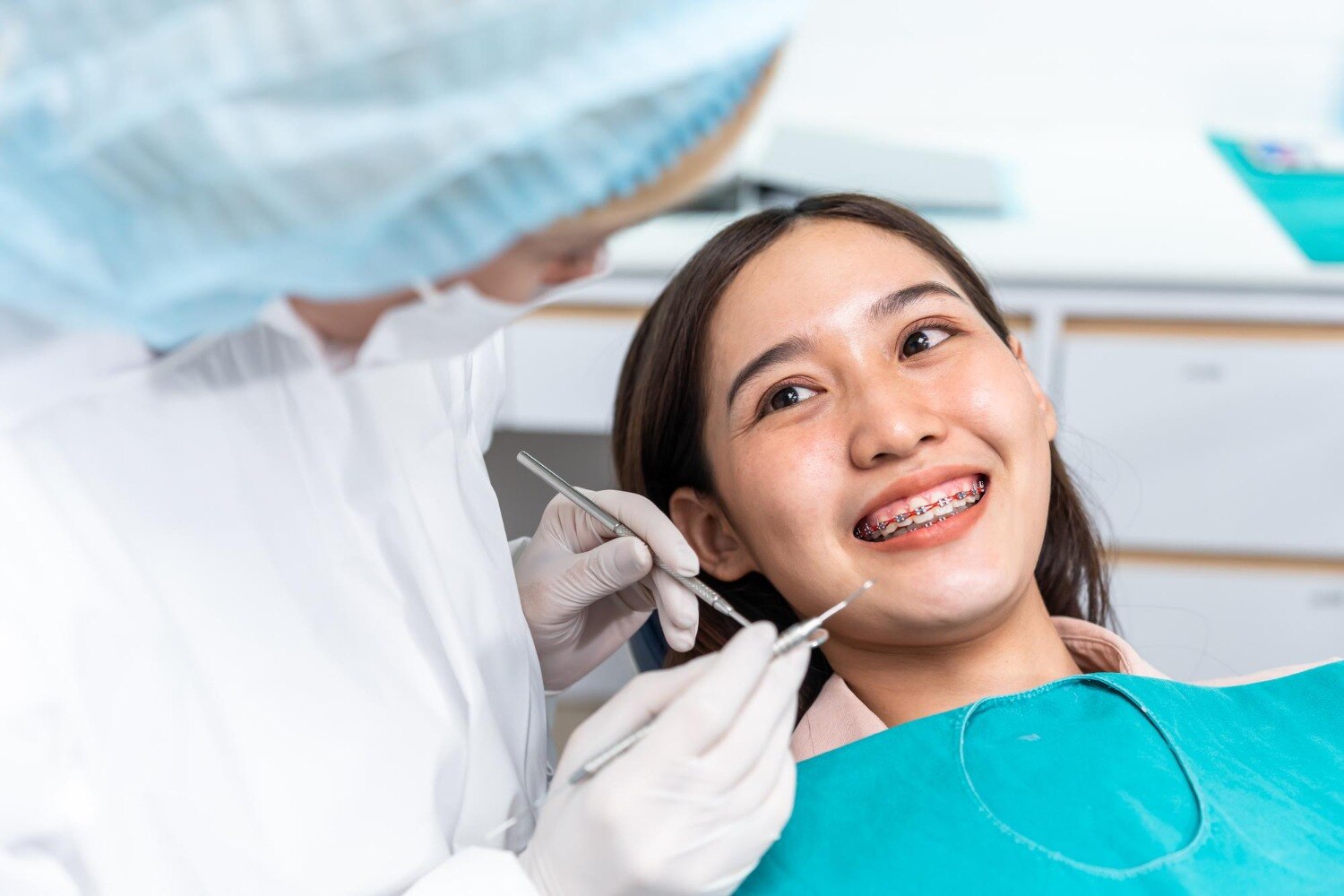
Brackets are bonded to tooth surfaces, and an archwire passes through them to apply controlled, sustained force. Elastic ties or clips hold the wire in each bracket. At later appointments, wire changes, bracket adjustments, springs, and other attachments redirect that force as the planned position develops.
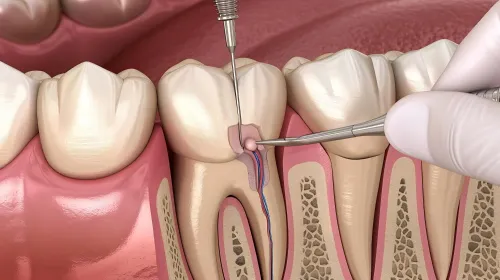
The force acts through the periodontal ligament, the thin tissue between each root and the surrounding alveolar bone. Pressure compresses the ligament on one side of the root, while tension stretches it on the other; the body removes bone in the pressure area and deposits new bone in the tension area.
This remodeling lets the tooth move gradually through its socket. Force it too quickly and the tissues cannot remodel safely, increasing soreness, mobility, loss of supporting bone, and external apical root resorption rather than shortening treatment reliably.
Orthodontists combine different force directions to control a tooth in three dimensions:
- Tipping moves the crown more than the root.
- Bodily movement shifts the crown and root together.
- Rotation turns the tooth around its long axis.
- Intrusion moves a tooth deeper into the bone.
- Extrusion draws it farther out of the bone.
The wire’s shape, bracket position, elastic ties or clips, and added springs determine which movement occurs. Proper sequencing matters: a force that rotates a tooth may be unsuitable for moving its root bodily.
What must be checked before orthodontic force is applied
Braces should not be fitted until the orthodontist knows whether the problem is tooth position, jaw growth, or both. An orthodontic examination checks the bite, tooth contacts, facial balance, jaw movement, gum condition, cavities, restorations, missing teeth, and signs of impacted teeth.
1. The orthodontist records clinical findings and takes photographs of your face, profile, smile, and teeth. Digital scans or physical impressions show tooth shape, arch width, crowding, spacing, and how the upper and lower arches fit together.
2. A panoramic radiograph shows developing, missing, impacted, or unusually positioned teeth, root shape, bone levels, and other jaw findings before brackets hide parts of the teeth. It also helps identify problems that a mouth examination cannot show.
3. A lateral cephalogram is indicated when the orthodontist needs to measure jaw growth, jaw position, facial proportions, incisor inclination, or the direction of growth. These measurements help distinguish teeth that lean incorrectly from jaws that do not relate normally.
Braces mainly reposition teeth. A child or teenager with a jaw-size or jaw-position discrepancy may need growth-guided treatment, while a severe discrepancy after facial growth is complete may require orthodontics combined with corrective jaw surgery.
Adults can receive orthodontic treatment, but gum disease, bone loss, untreated decay, missing teeth, and existing crowns, bridges, or other restorations can limit movement or require treatment first.
At PRYSM DENTAL STUDIO in Pune, a useful consultation is one that documents these findings and explains the proposed mechanics rather than promising every patient a standard timeline.
Related service
Best Orthodontics & Clear Aligners in Pune | Prysm Dental Studio A confident smile starts with properly aligned teeth. View service → |
How braces change the way upper and lower teeth meet
A functional bite requires more than straight-looking teeth: braces coordinate the upper and lower arches so they meet evenly during biting and chewing. Crowding is corrected by guiding teeth into available arch space, while spacing is closed by moving neighbouring teeth together.
Changing tooth positions also changes the bite relationship. Reducing excessive overjet brings protruding upper incisors closer to the lower teeth. A deep bite can be opened by raising the bite and moving front teeth vertically. An open bite can improve when teeth are guided toward contact.
A crossbite can be corrected by moving a tooth or widening the affected arch. Selected cases of underbite respond when the tooth positions, rather than a major jaw discrepancy, cause the problem.
Treatment may rotate individual teeth, alter their vertical position, and reposition canines and molars into a more stable relationship. That coordination spreads chewing contacts instead of leaving a few teeth to carry excessive force.
Brackets and wires do not always create the direction or force required. The orthodontist selects additional appliances for the specific movement and bite relationship, not for appearance alone:
- Elastic bands guide the upper and lower arches relative to each other.
- Bite ramps open a deep bite.
- Springs open or close spaces.
- Expanders widen a narrow arch.
- Space maintainers preserve room when a tooth is missing or still erupting.
Braces mainly move teeth; a severe jaw-size or jaw-position discrepancy may require jaw surgery with orthodontic treatment.
What determines treatment time, extractions, and treatment limits
12 to 30 months is the commonly quoted overall range for braces, but the actual duration depends on the malocclusion’s severity, the amount and direction of tooth movement, growth, and the appliance mechanics selected. Missed appointments delay adjustments, while poor cooperation with elastics or other instructions can leave the planned forces incomplete.
An orthodontist should review these points before recommending a tooth extraction:
- Substantial crowding that cannot be resolved within safe periodontal limits
- Protrusion that affects the facial profile
- A mismatch between tooth size and arch size
- The existing occlusion, facial profile, growth pattern, and planned mechanics
Braces mainly reposition teeth; they do not change a severely mismatched jaw size or jaw position on their own. A child or teenager may benefit from growth-guided treatment, while a severe discrepancy after facial growth is complete may require orthodontics combined with jaw surgery.
Treatment also carries a risk of external apical root resorption, meaning shortening at the ends of tooth roots. Root resorption is often small, but radiographic and clinical monitoring can identify concerning changes before the plan needs to change.
How to protect teeth during treatment and keep the result
Protecting teeth during treatment is part of the treatment itself: plaque trapped around brackets can cause cavities and permanent white-spot lesions. Braces do not directly cause decay; plaque, fermentable carbohydrates, and inadequate fluoride exposure create the preventable risk.
- Brush around every bracket and under the archwire with fluoride toothpaste. Clean between teeth with the interdental brush, floss threader, or water flosser your orthodontist recommends.
- Limit sticky, hard, and chewy foods, including caramel, chewing gum, hard nuts, and ice. A broken bracket or bent wire interrupts the planned force and can prolong treatment.
- Expect mild pressure, soreness, or cheek irritation after fitting or an adjustment. Contact the orthodontic office promptly for severe or persistent pain, swelling, facial trauma, or a loose bracket, wire, or other appliance; these are orthodontic emergencies.
Care also continues after brackets come off. Teeth can shift as the periodontal tissues change and as growth and normal aging alter the mouth, so the result is not permanently secured by removal alone. Wear retainers exactly as prescribed; many orthodontic protocols recommend long-term or lifelong nighttime wear.
Skipping retention allows small movements to accumulate and can undo the alignment you worked months or years to achieve.
Frequently asked questions
How do brackets and wires move teeth through bone?
Brackets hold an archwire that applies controlled force. The bone around tooth roots remodels, allowing teeth to move gradually into new positions.
What must be checked before braces apply orthodontic force?
Your dentist or orthodontist should check for cavities, gum disease, enamel damage, root problems, jaw growth, and tooth position using an examination and appropriate X-rays.
How do braces change the way upper and lower teeth meet?
Braces move individual teeth and adjust their angles so the upper and lower arches meet more evenly, improving problems such as overbite, underbite, crossbite, or open bite.
What determines braces treatment time and whether extractions are needed?
Treatment time depends on crowding, bite severity, tooth and bone response, growth, appliance type, and appointment compliance. Extractions depend on available space, facial balance, tooth position, and treatment goals.
How do you protect teeth during braces treatment and keep the result?
Brush around every bracket, clean between teeth, limit sticky or hard foods, attend adjustment visits, and wear retainers as prescribed after active treatment.