Multiple missing teeth affect more than the ability to bite: they can change how food is broken down, how clearly you speak and how your lips and cheeks are supported. By understanding denture mechanics, restoration choices, fitting checks and the adjustment process, you can judge whether a proposed appliance addresses both function and appearance.
Key takeaways
- Choose partial, complete, or fixed teeth based on support, stability, and remaining teeth.
- Ask your dentist to assess bone, gums, bite, speech, and cleaning ability first.
- Start with soft foods, small bites, and both sides of your mouth when adapting.
- Remove dentures for cleaning and overnight rest unless your dentist gives different instructions.
How a denture restores chewing and facial support
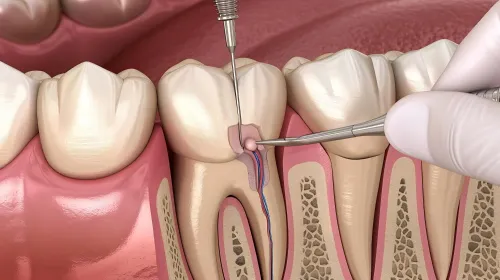
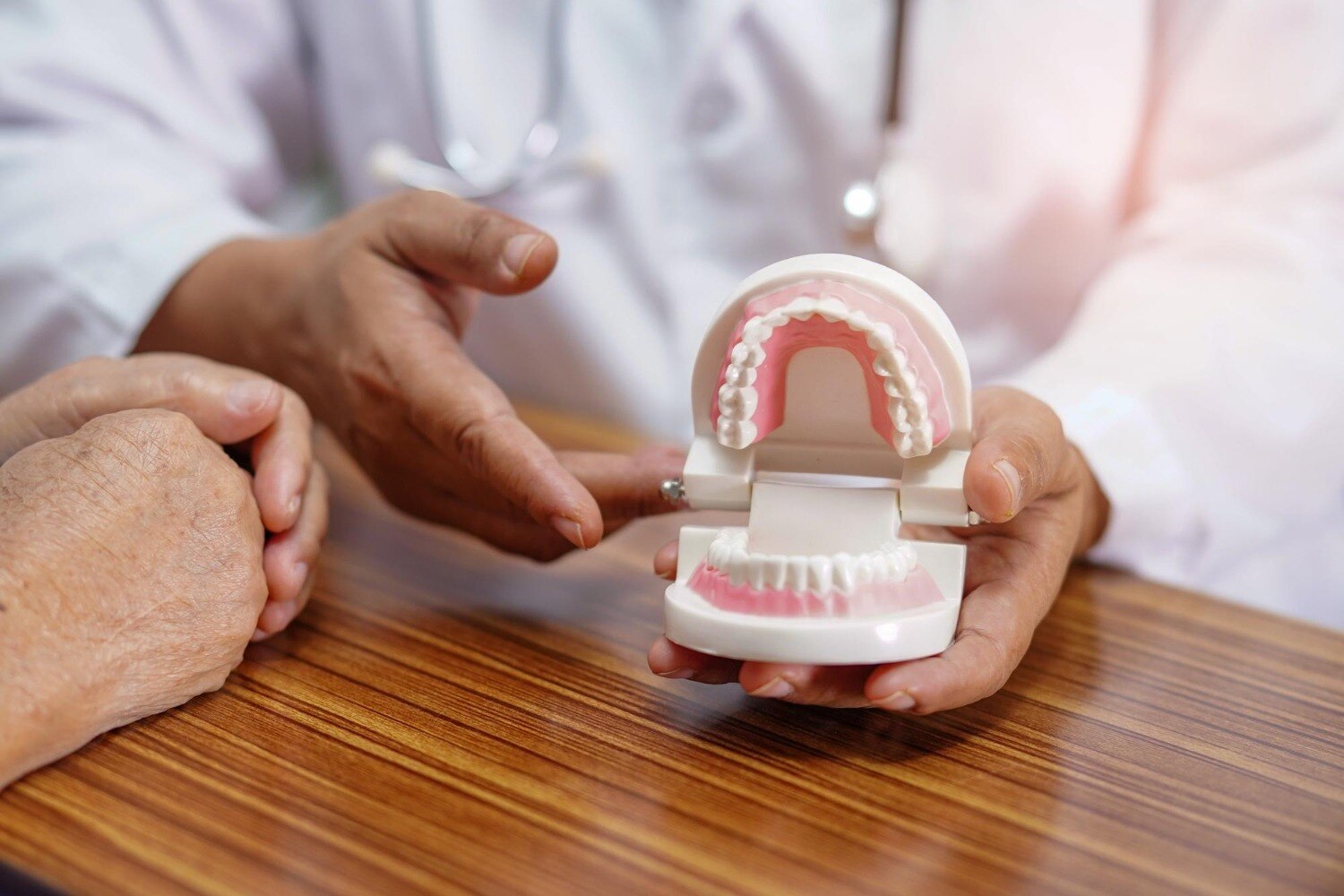
A denture improves denture chewing function by replacing missing tooth surfaces and spreading pressure across the gums, residual ridge and, for a partial denture, the supporting teeth. The denture base provides a platform, while artificial teeth meet opposing teeth to cut and crush food.
This restores useful chewing compared with leaving several gaps untreated, but denture bite force and tactile feedback remain below natural teeth or implant-supported teeth.
Start with softer foods and cut firmer food into small pieces while your muscles learn the new contact pattern. Chew on both sides to keep the denture balanced; biting only on one side can make it lift or rock. Adhesive can improve retention, but it cannot correct a poor fit or unstable bite.
Appearance improves because the denture replaces visible tooth portions and can support collapsed lips and cheeks. Tooth shade, shape, position and the amount of tooth showing during a smile all affect whether the result looks natural. The denture base must follow your facial contours without excessive bulk.
The vertical dimension also matters. If the denture makes the lower face too tall, the lips can look strained; if it is too short, facial folds may deepen and the mouth can appear collapsed. As the residual ridge remodels after tooth loss, support and fit can change, requiring professional review and possible adjustment.
How partial dentures, complete dentures and fixed options differ
The choice depends on more than how many teeth are missing. Match the replacement to the gaps’ location, the strength and position of remaining teeth, the amount of jawbone, and whether you need a removable or fixed solution.
| Option | What it means | When it applies |
|---|---|---|
| Partial dentures | Removable teeth attached to a gum-coloured base, supported by remaining teeth and oral tissues | Several teeth are missing, but sound teeth with adequate periodontal support remain. Weak or poorly positioned teeth can be overloaded, loosened or lost. |
| Complete dentures | Removable replacement for every tooth in one upper or lower arch | No usable teeth remain in that arch, or remaining teeth cannot predictably support a partial denture. Lower complete dentures usually move more because they have less support and must share space with the tongue. |
| Fixed bridges | Artificial teeth permanently joined to crowns on neighbouring teeth | One or a few adjacent teeth are missing, and the supporting teeth have enough enamel, bone support and healthy gums. A bridge is unsuitable when those teeth are weak or the gap is too extensive. |
| Implant-supported dentures | A removable denture that clips onto implants placed in the jawbone | Most or all teeth are missing and improved retention is needed, especially for a loose lower denture. Adequate bone, surgical fitness, hygiene and maintenance are necessary. |
Jawbone shrinkage after tooth loss can change how any removable denture sits. Relining, rebasing or replacement may restore fit, while implants require an assessment of bone volume and position before surgery. Fixed options avoid removal but still require meticulous cleaning around crowns, bridges or implants.
What the dental assessment must establish before treatment
The dental assessment must establish whether the remaining teeth, gums, jawbone and bite can support a stable appliance. It also identifies infection, untreated decay, gum disease, loose teeth and tissue changes that could cause pain or make the planned denture fail.
1. Examine the remaining teeth and gums for cavities, cracks, mobility, gum pockets, bleeding and periodontal support. A partial denture may rely on selected teeth for clasps or other support, so a weak tooth can change the design or require treatment first.
2. Perform a bite analysis to record how the upper and lower teeth meet, how much space is available and whether clenching or an uneven bite could dislodge the denture. The assessment also records the desired tooth position, smile display, lip support and speech needs.
3. Complete a jawbone evaluation with dental radiographs when indicated. The images show bone height, retained roots, impacted teeth, infection and other findings that affect extraction, denture stability or possible implant support.
4. Inspect the palate, gums, tongue and other soft tissues, then assess saliva flow, comfort and the person’s ability to insert, remove and clean the appliance. These details determine the denture base, extensions and maintenance plan.
If teeth are scheduled for extraction, an immediate denture can preserve appearance during healing, but it is made before the gums and extraction sites finish changing. Plan for adjustments, a reline or replacement after healing rather than treating its first fit as final.
How to check fit and adapt to removable dentures
Expect increased saliva, denture speech changes and difficulty controlling a removable denture during the first days. Chewing feels less precise than with natural teeth because the base can move and biting forces spread over the gums; practise with small, soft pieces, chew on both sides and read aloud.
Mild tenderness can occur, but denture sore spots that persist or become ulcers need review.
Use this denture fit checklist:
- Insert the denture fully. It should seat without force and remain stable while you speak, smile and chew.
- Check for rocking. A denture that lifts, clicks repeatedly or shifts when you bite needs assessment, not repeated tightening with adhesive.
- Inspect comfort. Look for persistent redness, cuts or ulcers where the base contacts your gums.
- Test function. You should speak clearly, swallow comfortably and remove and reinsert the appliance safely.
- Notice the bite. Your upper and lower teeth should meet evenly without one side hitting first or making the denture tip.
Arrange a denture adjustment if pain continues, eating remains difficult or the appliance repeatedly slips. Use adhesive only to improve retention after a clinician confirms the denture fits; it cannot correct poor extension, an unstable bite or a damaged base.
An immediate denture often needs adjustment or relining as extraction sites heal, so its first fit is not necessarily its final fit.
How to clean, maintain and reassess dentures over time
Remove removable dentures after meals when practical and rinse them under lukewarm water. For daily denture cleaning, use a soft denture brush and a non-abrasive denture cleanser; ordinary toothpaste can scratch the acrylic. Clean your gums, tongue and palate too, because plaque and yeast remain on oral tissues.
- Handle the denture over a folded towel or a basin filled with water so it does not fracture if dropped. Do not bend clasps or use hot water, which can distort the base.
- Remove dentures at night unless your clinician gives a specific reason to wear them. For overnight denture storage, place them in water or the recommended soaking solution, following the product instructions; never use boiling water or bleach.
- Use denture adhesive only in a thin layer on a properly fitting appliance. If you need more adhesive to stop movement, food trapping or loss of confidence, book an examination rather than masking the problem.
Return promptly for adjustment if the denture rocks, causes a sore that persists, affects speech, clicks during chewing or becomes difficult to insert and remove. An immediate denture often needs changes after extraction sites heal.
Ask about denture relining and replacement when the gums and residual ridge shrink, the bite changes, teeth become worn, or the base cracks. PRYSM DENTAL STUDIO can reassess whether an adjustment, reline, repair or replacement better addresses the change.
Related services
Dentures Treatment in Pune – Implant-Supported, Complete & Partial Dentures at Prysm Dental Studio Restore Your Smile with High-Quality Dentures at... View service → |
Treatment at Prysm Dental Studio – Complete Smile Restoration by Expert Dentists Full Mouth Rehabilitation in Pune – Restore Your Smile, Function &... View service → |
Frequently asked questions
How does a denture restore chewing and facial support?
Artificial teeth replace missing chewing surfaces, while the denture base spreads pressure across the gums, residual ridge, and supporting teeth. It also helps support the lips and cheeks.
What is the difference between partial, complete, and fixed tooth replacement?
A partial denture replaces several missing teeth while using remaining teeth for support. A complete denture replaces all teeth in one arch. Fixed options stay attached to implants or prepared teeth and cannot be removed by you.
What must a dental assessment establish before denture treatment?
The assessment should examine your gums, remaining teeth, bone and residual ridge, bite, oral tissues, jaw movement, speech needs, medical history, and ability to clean and handle the denture.
How can you adapt to and check the fit of removable dentures?
Begin with soft foods, small bites, and deliberate chewing on both sides. Report persistent soreness, slipping, clicking, numbness, or difficulty speaking so the dentist can check and adjust the fit.
How should you clean and maintain dentures over time?
Remove and rinse dentures after meals, brush them with a denture brush and mild cleanser, clean your gums and remaining teeth, and store dentures in water when instructed. Attend reassessments because fit changes as the mouth and supporting ridge change.
Related services
Prosthodontics, Crowns & Bridges Best Prosthodontics & Restorative Dentistry in Pune | Dental Crowns, Zirconia Crowns, Ceramic Crowns & Inlays-Onlays at Prysm Dental Studio Restore... View service → |
Best Scaling & Polishing Treatment in Deccan Gymkhana, Pune | Dr. View service → |