A tooth that hurts is not automatically a tooth that needs root canal treatment. The pattern of pain, examination findings and X-rays help distinguish inflamed pulp from a crack, exposed dentin, gum disease, sinus pressure or an infection that has already killed the pulp. By the end, you will know which symptoms require same-day care, what diagnosis involves, and how to compare saving the tooth with extraction.
Key takeaways
- Lingering heat or cold pain points to deeper pulp inflammation than brief sensitivity.
- Seek urgent dental care for facial swelling, fever, difficulty swallowing, or trouble breathing.
- Dentists combine symptoms, pulp tests, tapping, gum checks, and X-rays before recommending treatment.
- A root-filled back tooth usually needs a crown to prevent fracture during chewing.
Does the pain point to inflamed pulp, infection, or another cause?
A short sharp sensitivity to cold or sweet food that stops within seconds after the trigger is removed fits exposed dentin or reversible pulpitis more closely than advanced pulp inflammation. It still needs attention if it keeps recurring, but it is less concerning than lingering pain.
Lingering pain after hot or cold exposure, pain that starts without a trigger, wakes you at night, worsens when lying down, or hurts when you bite or release your bite points more strongly toward irreversible pulpitis or inflammation around the root.
A cracked tooth, leaking filling, gum disease, or sinus pressure can cause similar symptoms, so pain duration alone cannot confirm the diagnosis.
Arrange a prompt dental assessment if you notice:
- Pain lasting minutes after temperature exposure
- Increasing pain on biting or tapping
- Facial swelling, fever, or a bad taste from drainage
- Swelling under the jaw or tongue, trouble swallowing, difficulty breathing, or reduced ability to open your mouth
Pain that suddenly disappears is not proof of healing. A necrotic pulp can stop producing pain while infection continues around the root tip, where it may form an abscess. A dentist must test the tooth and surrounding tissues before deciding whether root canal treatment is needed.
When is tooth pain an emergency rather than a routine appointment?
Facial swelling, fever, rapidly worsening pain, or swelling under the jaw or tongue requires same-day dental assessment. Difficulty swallowing, difficulty breathing, inability to open your mouth normally, or swelling that affects the eye warrants emergency medical care, because infection can obstruct the airway or spread into deeper tissues.
| Symptom | Action | Why it matters |
|---|---|---|
| Facial swelling or fever | Same-day dentist | May indicate a spreading infection or periapical abscess |
| Swelling under the jaw or tongue | Same-day assessment; emergency care if worsening | Infection can threaten the airway |
| Difficulty swallowing or breathing | Emergency care now | Swelling may be compressing the throat or airway |
| Pain that suddenly disappears | Keep the appointment | Pulp necrosis can remove sensation while infection continues |
A toothache stopping does not prove healing. When the pulp dies, pain can decrease sharply even as bacteria spread through the root canals and tissues around the root. A periapical abscess may then develop with little tooth pain, particularly if pressure drains through the gum.
Do not rely on leftover antibiotics to solve the source. A dentist must assess whether drainage, root canal treatment, or extraction is needed; antibiotics become relevant when systemic signs or spreading infection are present.
How does a dentist confirm whether root canal treatment is needed?
A dentist confirms the need for root canal treatment by combining your pain history with several findings; no single test proves pulp damage in every tooth. The dentist compares the suspected tooth with neighbouring or matching teeth and checks for decay, cracks, gum disease and other causes.
- Describe when pain starts, what triggers it, and whether it lasts seconds or minutes. Mention spontaneous pain, night pain, heat or cold sensitivity, pain on biting, previous injury, fillings and dental treatment.
- Expect cold pulp testing and electric pulp testing. A lingering or absent response can suggest irreversible inflammation or pulp death, but the result must match the other findings.
- The dentist uses percussion and bite tests to identify inflammation around the root or a cracked tooth. Periodontal probing checks for isolated deep gum pockets that can signal a crack or periodontal problem.
- A periapical X-ray shows the root, surrounding bone, deep decay and changes near the root tip. A normal image does not exclude early pulp disease; CBCT is reserved for selected complex cases.
Bring your medication list, medical conditions, allergies and previous dental records or X-rays. Eat normally unless sedation is planned, and do not start leftover antibiotics before assessment. Ask which tooth is causing the findings and what alternatives were considered.
What happens during treatment, and what can you do while waiting?
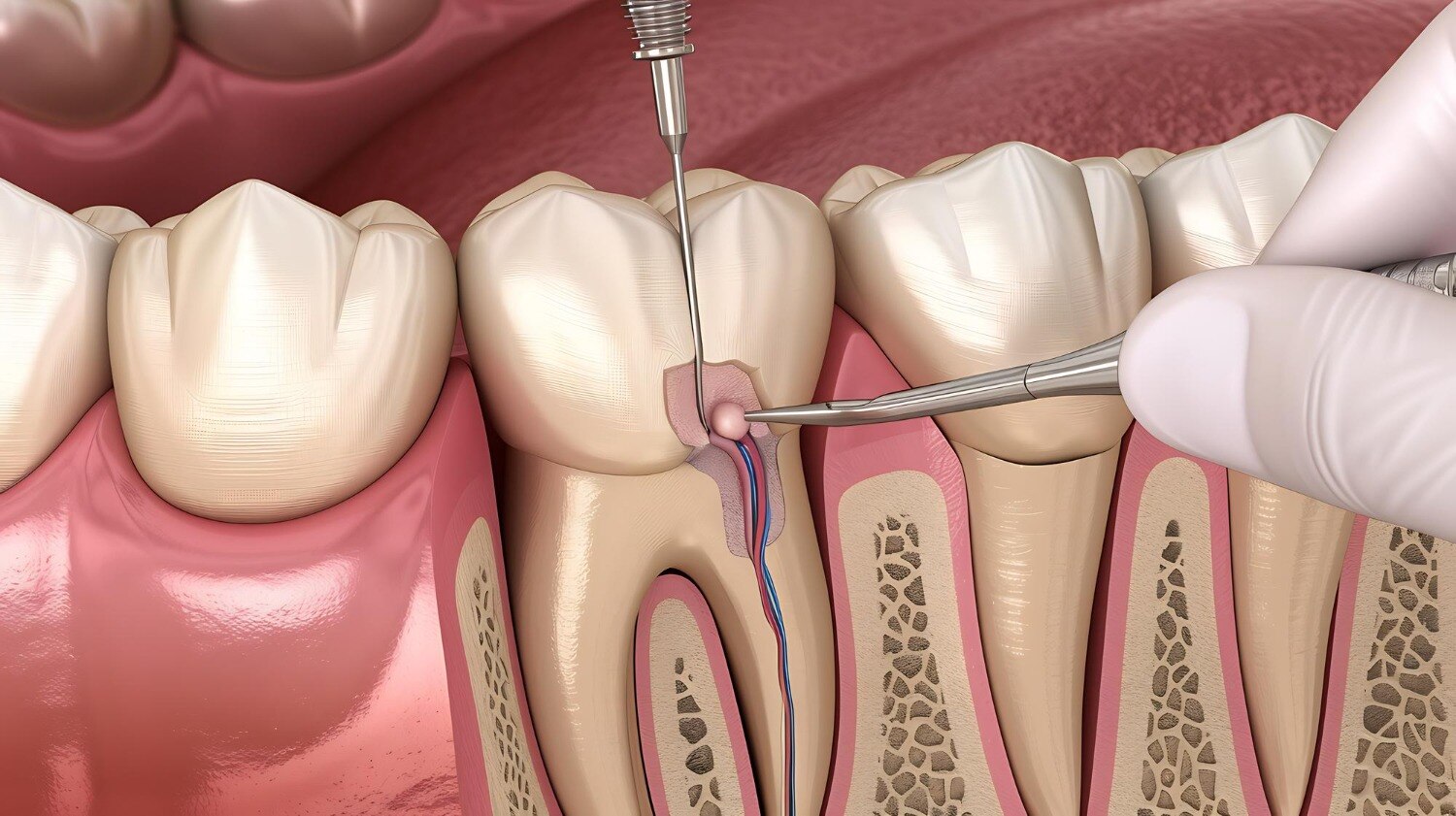
Root canal treatment removes inflamed or dead pulp from inside the tooth. Local anaesthetic numbs the area, while rubber dam isolation keeps saliva away. The dentist creates an opening, removes the pulp, and performs cleaning and shaping canals before sealing them with filling material. A temporary restoration protects the tooth until definitive restoration.
- The dentist checks that you are numb before starting; tell them if you feel sharp pain.
- Fine instruments and disinfecting fluid remove tissue and bacteria from each canal.
- The canals are sealed, and the opening is closed with a temporary or permanent filling.
Antibiotics are not a substitute for this process. They do not remove infected or necrotic pulp inside a tooth, so pain or swelling can return when the medicine ends. A dentist may prescribe antibiotics when fever, spreading swelling, malaise, or swollen lymph nodes indicate systemic involvement, or when indicated treatment is not immediately available.
While waiting, take ibuprofen or paracetamol according to the package instructions if those medicines are safe for you; ask a pharmacist if you have ulcers, kidney disease, liver disease, pregnancy, allergies, or take blood thinners. Avoid placing aspirin on the gum, chew on the opposite side, and avoid very hot or cold foods.
Seek emergency care for swelling that affects breathing, swallowing, eye opening, or mouth opening.
What restoration and recovery does a root-filled tooth require?
A temporary filling seals the access opening while the tooth and surrounding tissues settle. It also lets the dentist check your bite and replace the material easily if symptoms continue. Leaving the tooth with only a temporary seal risks leakage, decay and fracture, so arrange the permanent restoration promptly.
| Temporary filling | Protects the canal opening between visits | Used while symptoms settle or laboratory-made work is prepared |
|---|---|---|
| Permanent restoration | Provides the long-term seal and restores chewing function | Suitable when enough sound tooth structure remains |
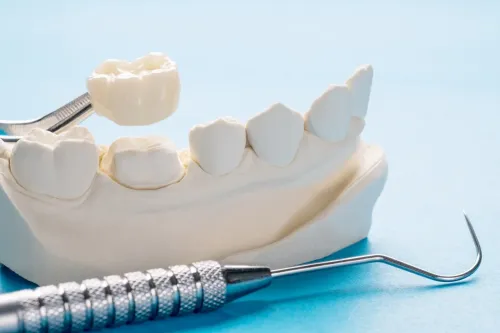
| Crown or other cuspal coverage | Covers and supports weakened cusps against splitting | Often needed for heavily restored or back teeth |
A filling may be sufficient when the remaining walls are strong; a crown, onlay or another cuspal coverage restoration is chosen when biting forces threaten the tooth. Root-filled teeth do not become immune to decay or gum disease.
Mild tenderness for several days can follow treatment, especially when inflammation surrounded the root. Ask for review if pain is severe, worsens, persists beyond the expected recovery period, or the tooth feels high when you bite. Contact the dentist promptly for swelling, fever, a bad taste, or a temporary filling that falls out.
A high bite can keep the ligament inflamed until adjusted.
Should you save the tooth, extract it, or seek specialist evaluation?
Choose preservation when the tooth is restorable: enough sound structure remains for a sealed filling or crown, the supporting bone and gums are adequate, and no untreatable crack is present.
| Option | What it offers | When it applies |
|---|---|---|
| Root canal treatment | Removes infected pulp while keeping the natural tooth; requires a definitive restoration | The tooth is restorable and the canals can be cleaned and sealed predictably |
| Extraction | Removes the infection source, but leaves a gap that may need a bridge, denture or implant | The tooth cannot be restored, has poor support, or has a confirmed untreatable vertical root fracture |
| Specialist evaluation | Clarifies difficult anatomy, cracks and failed treatment before another irreversible step | Canals are calcified or curved, symptoms persist after treatment, or the diagnosis is uncertain |
A tooth that already had treatment may need retreatment for missed canals, leakage, new decay or inadequate sealing. If infection remains around the root tip and nonsurgical retreatment cannot reach its cause, apical surgery may be considered. A vertical root fracture usually makes predictable preservation impossible.
Ask PRYSM DENTAL STUDIO to explain tooth restorability, the proposed final restoration and the replacement plan before choosing extraction. A second opinion from an endodontist is sensible when the anatomy is complex, a fracture is suspected, or previous treatment has failed.
Related service
Best Root Canal Treatment Specialist in Deccan Gymkhana, Shivajinagar, Pune | Prysm Dental Studio by Dr. View service → |
Frequently asked questions
How can tooth pain point to inflamed pulp, infection, or another cause?
Brief cold or sweet sensitivity that stops within seconds fits exposed dentin or reversible pulpitis. Lingering spontaneous pain, heat sensitivity, pain on biting, swelling, or a gum abscess can indicate irreversible pulp inflammation or infection. Cracks, decay, loose fillings, gum disease, and sinus problems can cause similar symptoms, so examination is necessary.
When is tooth pain an emergency rather than a routine appointment?
Contact a dentist urgently for facial or gum swelling, fever, pus, rapidly worsening pain, or difficulty opening your mouth. Go to emergency care immediately if swelling affects breathing or swallowing, or spreads toward the eye or neck.
How does a dentist confirm whether root canal treatment is needed?
The dentist reviews the pain pattern and examines decay, cracks, fillings, gums, and tenderness to tapping or biting. Cold or electric pulp testing compares the tooth with nearby healthy teeth, while dental X-rays check bone changes, decay depth, and the root area. No single test proves the diagnosis on its own.
What happens during root canal treatment, and what can you do while waiting?
The dentist numbs and isolates the tooth, removes inflamed or infected pulp, cleans and shapes the canals, and seals them. While waiting, follow the dentist’s instructions, avoid chewing on that tooth, keep the area clean, and use only pain medicine that is safe for you. Do not place aspirin directly on the gum or rely on leftover antibiotics.
What restoration and recovery does a root-filled tooth require?
After the canals are sealed, the tooth needs a permanent filling or, especially for a premolar or molar, a crown to restore strength. Avoid hard chewing until the final restoration is fitted. Mild tenderness can follow treatment, but increasing swelling or severe pain needs prompt dental review.