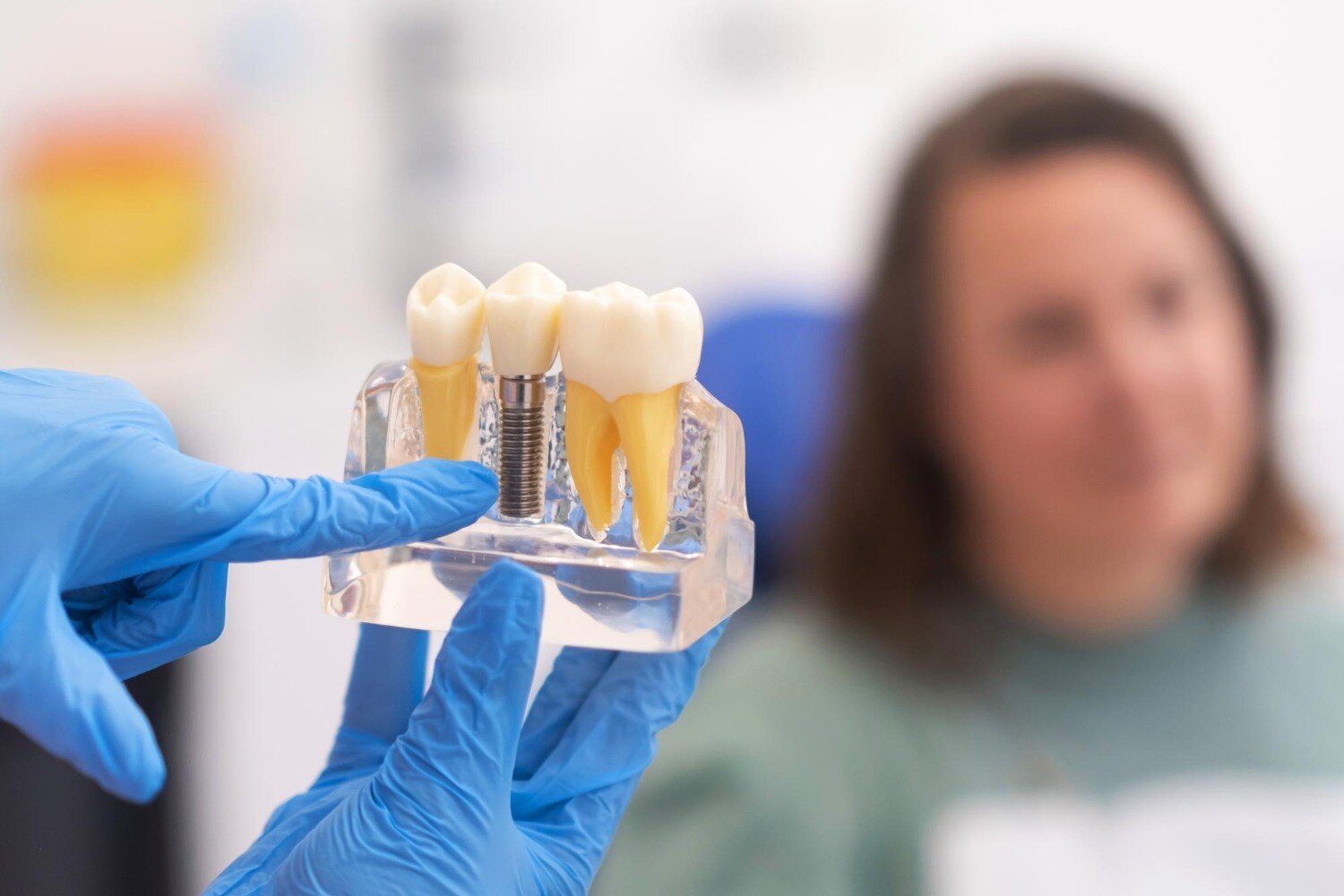
An implant is considered only after a dentist confirms that the missing-tooth site, surrounding teeth, gums, bite and general health can support surgery and healing. By the end, you will know what is assessed for one, several or many missing teeth, when grafting or additional imaging enters the plan, and when another replacement may be more suitable.
Key takeaways
- A single gap may need one implant; several gaps may need bridge or denture support.
- Treat decay, gum disease and infection before placing an implant.
- Review 3D scans for bone volume, nerves, sinuses and nearby tooth roots.
- Choose grafting, staged treatment or another replacement when healing risks are high.
What pattern of tooth loss can implants address?
An implant is considered according to how many teeth are absent and where the gaps sit. The pattern determines whether treatment uses one replacement tooth, a fixed bridge or denture support. The cause of tooth loss and active oral disease must be addressed first; untreated disease can compromise healing and long-term support.
- One missing tooth: A single implant can support one replacement tooth without cutting down neighbouring teeth for a conventional bridge. Surgery and a longer treatment course are the trade-offs.
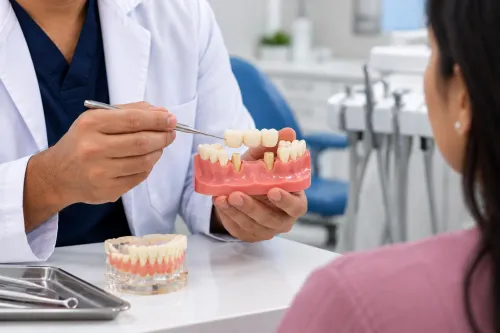
- Several missing teeth: When several missing teeth are multiple adjacent teeth, two or more implants may support a fixed bridge. One implant per tooth is not always necessary; the site and planned restoration determine the design.
- Many missing teeth: Implants can improve the retention and stability of a removable denture. The denture may replace part or all of the missing teeth.
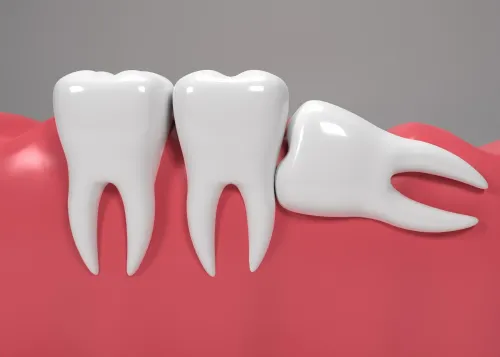
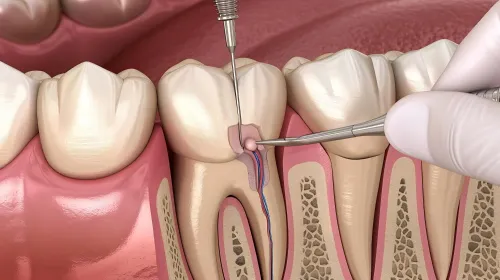
A dental implant replaces the tooth root, not the visible tooth. Treatment has three functional parts:
- The implant sits in the jawbone as the artificial root.
- The abutment connects the implant to the replacement.
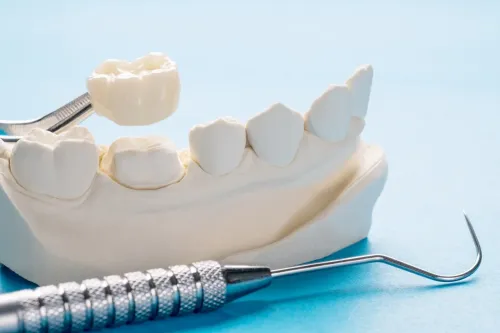
- A crown replaces one visible tooth, while a bridge or denture replaces several teeth.
A temporary replacement may be used during healing because a permanent restoration cannot always be attached immediately.
Which clinical findings determine whether an implant site is suitable?
An implant site is considered suitable when the bone can hold the implant, the gums are healthy, nearby teeth are stable, and you can clean and access the area properly. Active infection, untreated decay, or uncontrolled gum disease must be treated first; placing an implant into diseased tissue raises the risk of failure.
| Finding | What the clinician checks | Why it matters |
|---|---|---|
| Adequate jawbone volume and width | Enough height, width, and favourable position for the planned implant | Thin or deficient bone may prevent safe placement or require grafting |
| Healthy gums | No active periodontitis, swelling, or untreated infection | Inflamed tissues can weaken support around the implant |
| Stable neighbouring teeth | Firm roots, healthy supporting bone, and no untreated abscesses | A failing adjacent tooth can compromise the site and final restoration |
| Sufficient mouth opening | Space to position instruments and place the implant accurately | Limited opening can restrict surgical access and restorative work |
| Bite and restorative space | Room for the crown, correct contact with opposing teeth, and manageable biting forces | Excessive force or inadequate space can loosen components or overload bone |
| Oral hygiene | Ability and willingness to brush, floss, or use interdental brushes around the restoration | Plaque accumulation can cause peri-implant inflammation and bone loss |
The clinician also considers bone shape, nerve position, sinus location, soft tissue, and whether you can maintain the result. Bone deficiency does not automatically rule out treatment, but grafting or a sinus-elevation procedure adds surgery, healing time, and cost. Severe grinding or an unstable bite may require protection and bite management before placement.
How are the implant site and surrounding anatomy examined?
The examination starts with an inspection of the proposed site and the teeth around it. The clinician checks gum health, signs of infection, jawbone contours, neighbouring roots, available space for the replacement tooth, mouth opening, bite contacts and your ability to clean the area.
The dentist may also feel the ridge, test nearby teeth and review medical and dental history. Dental X-rays provide different views of the site:
| View | What it shows | When it helps |
|---|---|---|
| Periapical X-ray | Tooth roots, local bone and infection | Assessing one implant site and neighbouring roots |
| Panoramic X-ray | Both jaws, multiple teeth and major structures | Screening several missing teeth or wider treatment areas |
| Three-dimensional CBCT imaging | Bone width and height, nerve position, roots and the maxillary sinus | Planning when two-dimensional images do not show anatomy clearly |
Three-dimensional CBCT imaging uses cone-beam CT technology to create a cross-sectional view rather than a flat picture. It is helpful when the implant site lies close to the inferior alveolar nerve, nasal cavity or maxillary sinus, or when bone volume is uncertain.
It is not required for every implant case; the clinician orders it when the extra detail could change implant position, grafting needs or surgical safety.
What changes when bone is missing or healing risks are present?
Insufficient bone volume or an unfavorable sinus position changes the sequence, not necessarily the possibility, of implant treatment. Bone grafting or ridge augmentation may rebuild a narrow or deficient ridge, while a sinus lift can create height in the upper jaw.
These procedures add surgery, healing time, cost and risks, so placement may be delayed until the graft is stable on examination and imaging.
- Active gum disease, untreated decay or an infection must be controlled before surgery; bacteria can undermine healing and cause peri-implant disease.
- Diabetes needs medical review: good control can support treatment, while high blood glucose raises delayed-healing and infection risks.
- Smoking, including vaping, impairs healing and raises the risk of implant failure and peri-implant disease; stopping before surgery and throughout healing may be advised.
- Poor hygiene means postponing placement until you can clean around teeth and implants consistently; professional maintenance remains necessary after the crown is fitted.
- Grinding overloads implants and may require a night guard, bite adjustment or a different restoration design.
- Medicines that affect bleeding, immunity, healing or bone need review with dental and medical clinicians. Do not stop a prescription on your own.
After disease control or risk reduction, treatment may be staged: graft first, implant after healing, then the crown after osseointegration. Discuss infection, nerve injury, sinus complications, failed integration and later bone loss before consenting.
When is another option or a staged implant plan more sensible?
Another option or a staged plan is more sensible when the natural tooth has a sound prognosis, surgery is poorly timed, cleaning access is limited, or the expected benefit does not justify the time and cost.
Several adjacent missing teeth do not automatically require one implant per tooth: an implant-supported bridge may use two or more implants.
| Option | What it means | When it applies |
|---|---|---|
| Retained natural tooth | Repair the tooth with a filling, crown or root-canal treatment | The tooth is restorable and its long-term prognosis exceeds that of extraction |
| No replacement | Leave the space under review | The gap has little effect on chewing, speech or appearance, and neighbouring teeth are stable |
| Conventional bridge | Crowns on prepared teeth support a replacement tooth | Adjacent teeth already need crowns and can support the bridge |
| Removable partial denture | A removable appliance replaces one or more teeth | You need a lower-cost, non-surgical or easily adjustable option |
| Implant or implant-supported bridge | An implant supports a crown, bridge or denture | You accept surgery and healing, and bone, gums, bite and hygiene support predictable maintenance |
Ask the Pune dental team to compare prognosis, appearance, chewing, cleaning access, surgical risks, treatment stages, temporary teeth, maintenance and total cost—not just the initial fee. PRYSM DENTAL STUDIO can help structure that comparison around your tooth prognosis and practical priorities.
Discuss whether active decay or gum disease must be treated first, whether immediate loading is realistic, and what happens if an implant fails. A staged plan may preserve options while infection is controlled, bone heals or you decide between a conventional bridge and a removable partial denture.
Related services
Best Dental Implants Specialist in Deccan Gymkhana, Pune | Prysm Dental Studio by Dr. View service → |
Dentures Treatment in Pune – Implant-Supported, Complete & Partial Dentures at Prysm Dental Studio Restore Your Smile with High-Quality Dentures at... View service → |
Frequently asked questions
What pattern of tooth loss can dental implants address?
Implants can replace one missing tooth, support a fixed bridge for multiple missing teeth or anchor a removable denture. The number and position of gaps determine the design.
Which clinical findings determine whether an implant site is suitable?
The assessment includes gum health, active infection, remaining bone, adjacent teeth, bite forces, oral hygiene and medical factors that affect healing.
How are the implant site and surrounding anatomy examined?
A dentist examines the mouth and bite, reviews dental X-rays and may use 3D cone-beam computed tomography to assess bone, nerves, sinuses and nearby roots.
What happens when bone is missing or healing risks are present?
Treatment may involve bone grafting, sinus augmentation, infection control or a healing period before implant placement. Healing risks require medical review and careful planning.
When is another option or a staged implant plan more sensible?
A bridge, denture or staged implant plan may suit you when bone is inadequate, disease is untreated, healing risks are significant or immediate placement would be unsafe.
Related service
Prosthodontics, Crowns & Bridges Best Prosthodontics & Restorative Dentistry in Pune | Dental Crowns, Zirconia Crowns, Ceramic Crowns & Inlays-Onlays at Prysm Dental Studio Restore... View service → |