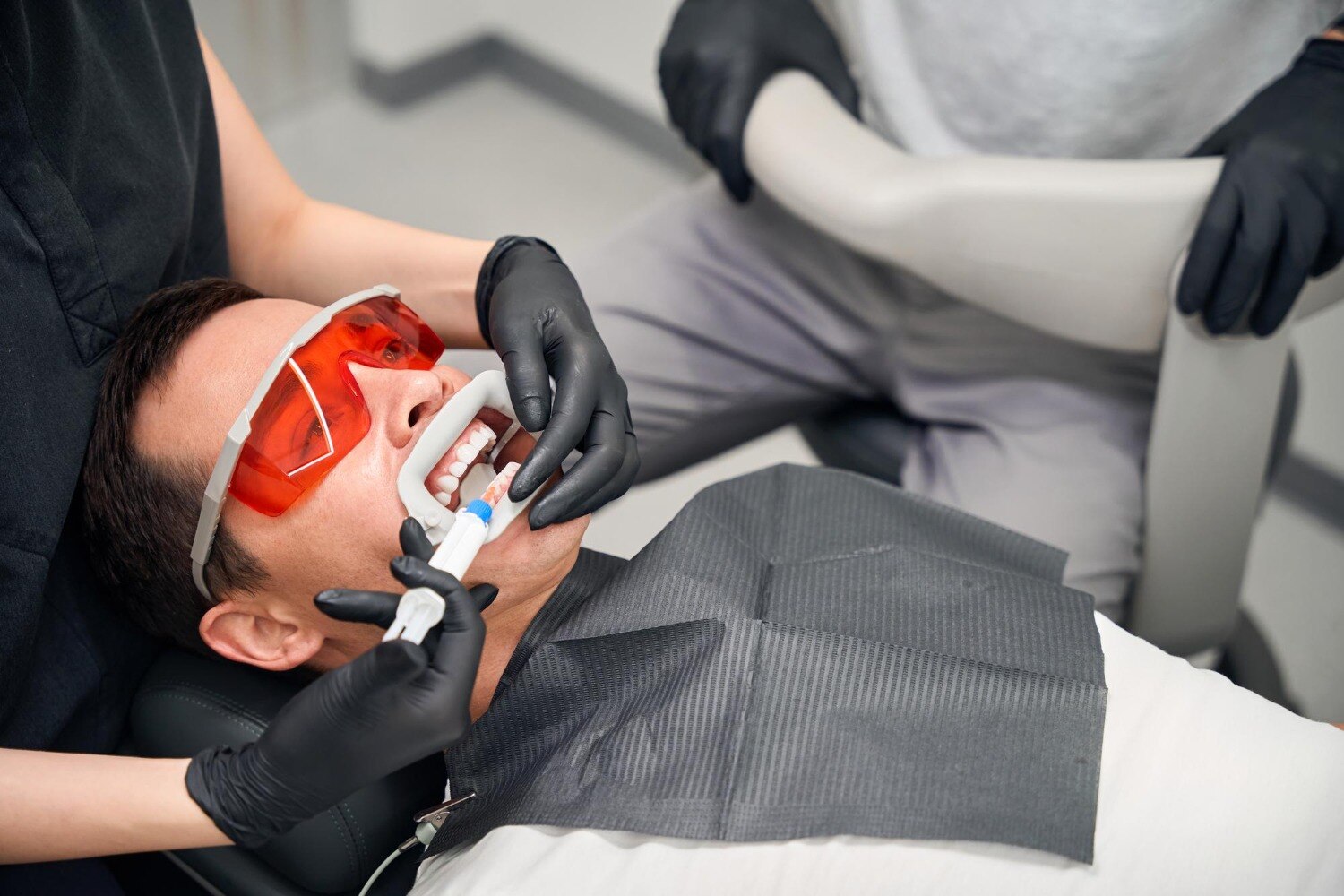
A smile can look uneven because of tooth proportions, gum levels, colour changes, old restorations or tooth position—not simply because the teeth are not white enough. By the end, you will understand how an aesthetic dentist identifies the cause, compares conservative and irreversible treatments, and builds a result that suits your bite, face and long-term oral health.
Key takeaways
- Assess tooth shape, colour, gum display, position and bite before choosing treatment.
- Use whitening for suitable surface stains, not fillings, crowns or deep internal discolouration.
- Choose bonding for minor changes and veneers or crowns only when their added coverage is justified.
- Plan tooth length, gum levels and colour together for a balanced, natural-looking result.
What an aesthetic dentist examines before changing your smile
An aesthetic dentist decides whether the concern is shape, colour, gum display, tooth position or bite by examining your teeth as part of your face, lips and jaw—not by judging whiteness alone. A smile assessment considers tooth proportions, facial symmetry, gum levels, lip movement, speech and how the teeth meet.
1. Check dental health before cosmetic planning. Active decay, leaking fillings, cracks, gum disease, tooth wear and bite problems must be addressed first. Whitening or veneers placed over untreated disease can hide symptoms while the underlying damage progresses.
2. Compare tooth shape and position. The dentist records chipped edges, worn or shortened teeth, uneven incisal lines, gaps, narrow teeth, rotations and mismatched restorations. A tooth that looks short may have an overgrown gum margin rather than a problem with its enamel length.
3. Identify the colour change. Surface staining may respond to professional cleaning, while intrinsic changes from fluorosis, tetracycline, trauma or a non-vital tooth need a different plan. A dark non-vital tooth requires endodontic assessment before internal bleaching or restorative masking.
4. Assess gum display and bite. Uneven gum levels or excessive gum display may involve periodontal treatment and bone-level assessment; an incorrect bite can make cosmetic additions chip or wear. The dentist also checks whether tooth movement could solve the problem more conservatively than preparation.
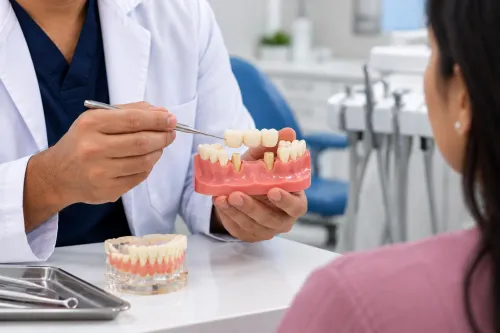
A digital simulation, diagnostic wax-up or temporary mock-up lets you assess proposed length, contour, speech and lip support. It guides planning rather than guaranteeing the final result, which can change with lighting, material, gum healing and facial movement.
How tooth shape, length and gum levels can be changed
Small changes suit bonding or enamel reshaping; major changes need orthodontics, veneers, crowns or gum treatment.
| Problem | Treatment | Main limitation |
|---|---|---|
| Chipped edges | Composite bonding; minor enameloplasty | Bonding can stain or fracture at the incisal edge; enamel does not grow back |
| Worn teeth or an uneven incisal line | Bonding, veneers or crowns | The choice depends on remaining tooth structure, wear and bite forces |
| Small teeth, gaps or narrow teeth | Bonding or veneers | Adding width can make the smile look bulky if proportions are not planned |
| Rotated teeth or larger spacing | Orthodontic treatment with aligners or braces | Retainers are needed because teeth can move again |
| Excessive gum display or uneven gum levels | Periodontal recontouring or crown-lengthening surgery | Exposing more tooth can expose root surfaces and cause sensitivity |
Composite bonding usually removes little or no healthy enamel, making it useful for chipped edges, small teeth gaps and modest changes to worn teeth. Clenching, grinding, hard foods and frequent staining increase the chance of repair or replacement.
Orthodontics moves teeth but does not whiten them or change their basic shape. A narrow tooth may therefore need alignment followed by bonding or a ceramic restoration.
Gum surgery requires assessment of periodontal health and the bone level around each tooth. Reducing gum tissue without checking those structures can create an uneven margin or expose vulnerable root surfaces. The final design should also account for lip movement, speech, facial proportions and the bite; perfectly uniform teeth do not always look natural.
How dentists identify and improve different types of tooth discolouration
A brown or yellow film on the enamel is a surface stain, so professional cleaning can remove it without changing the tooth underneath. Ask about the source before choosing whitening: tobacco, coffee and tea leave deposits that cleaning addresses, while whitening natural teeth changes the colour of the tooth structure itself.
Intrinsic discolouration lies within enamel or dentine, so external whitening is less predictable. Common patterns include:
- Fluorosis, which creates white, brown or mottled areas in enamel.
- Tetracycline staining, which can produce deep grey or banded colour.
- Trauma-related colour change, often affecting one tooth.
- A non-vital tooth, which may darken after damage to its pulp.
A dark non-vital tooth needs endodontic assessment before cosmetic treatment. Internal bleaching or restorative masking may be appropriate; repeating external whitening will not correct the cause.
Whitening changes natural teeth, not fillings, crowns, bridges, porcelain veneers or composite bonding. If a visible restoration looks darker than the surrounding teeth, whitening the natural teeth first can help the dentist select a closer shade, but the restoration itself may still need replacement.
Replacing every old restoration can remove sound tooth tissue without improving the result enough. Compare the colour benefit with pulpal risk, cost, repairability and whether a small additive repair can solve the mismatch. Shade matching should use hydrated teeth under controlled lighting because drying temporarily makes enamel appear lighter.
Choosing between bonding, veneers, crowns, whitening and aligners
The least invasive option is not always the best match for the problem. Compare the trade-offs before choosing:
| Option | Invasiveness and reversibility | Durability and maintenance | Appointments and relative cost |
|---|---|---|---|
| Composite bonding | Usually little or no enamel removal; repairable and more reversible | Less resistant to staining and fracture than ceramic; polishing, repair or replacement may be needed | Often one visit; low to moderate cost |
| Whitening | No drilling; changes natural tooth colour only | Temporary sensitivity or gum irritation can occur; fillings, veneers and crowns do not whiten | One or several sessions; low to moderate cost |
| Porcelain veneers | Enamel removal makes conventional veneers irreversible | Durable, but can fracture, debond or develop decay at the margins; high-quality hygiene is essential | Usually consultation, preparation and fitting visits; high cost |
| EMax veneers | A ceramic veneer option; preparation depends on the design and remains irreversible if enamel is removed | Strong, stain-resistant ceramic still needs protection from grinding and careful cleaning | Several planning and fitting visits; high cost |
| Ceramic crowns | Most invasive because the tooth is shaped on all sides | Durable coverage for weakened teeth, but the margin can decay and the crown can fracture or loosen | Usually two or more visits; highest cost |
| Clear aligners | Non-invasive tooth movement, though attachments may be added | Retainers are needed after treatment; they do not change tooth colour or rebuild chips | Multiple reviews over weeks or months; moderate to high cost |
Whiten natural teeth before matching visible bonding, veneers or crowns. Treat decay, cracks, gum disease and uncontrolled grinding first, or cosmetic work can conceal the problem.
How to plan a natural-looking result that remains healthy
A natural-looking result starts with confirming that the teeth and gums are healthy enough for cosmetic work. Treating decay, leaking fillings, cracks, gum disease, active wear or an unstable bite first prevents veneers or bonding from hiding a problem that later damages the result.
Before treatment, ask your dentist to confirm:
- How tooth length, contour, gum display, midlines, lip movement, facial proportions, speech and bite will affect the design.
- Whether a diagnostic wax-up, digital smile simulation or temporary mock-up shows the proposed changes clearly enough to assess comfort, pronunciation and lip support.
- Whether the preview is a planning aid rather than a guarantee; lighting, facial movement, gum healing and the properties of ceramic or composite can change the final appearance.
- When shade matching restorations will occur. Compare hydrated teeth under controlled lighting, because drying during isolation makes teeth look temporarily lighter.
- Whether whitening comes before replacing visible fillings, crowns, veneers or bonding. Whitening changes natural tooth structure, not existing restorations, so a restoration may still need replacement.
Protect the result with daily brushing, fluoride toothpaste, interdental cleaning and regular reviews. A night guard can protect bonding, veneers or worn teeth when you clench or grind. If aligners or braces changed tooth position, wear retainers as instructed; teeth can move again without continuing retention.
At PRYSM DENTAL STUDIO, ask for the proposed design and maintenance plan in writing so you know what must be protected after treatment.
Related services
Cosmetic & Aesthetic Dental Treatment Cosmetic & Aesthetic Dentistry at Prysm Dental Studio – Transform Your Smile with Dr. View service → |
Best Orthodontics & Clear Aligners in Pune | Prysm Dental Studio A confident smile starts with properly aligned teeth. View service → |
Frequently asked questions
What does an aesthetic dentist examine before changing your smile?
The assessment covers tooth proportions, facial symmetry, gum levels, lip movement, speech, tooth position, tooth colour and how your teeth meet.
How can tooth shape, length and gum levels be changed?
Dentists can reshape enamel, add composite bonding, place veneers or crowns, move teeth with aligners, and address uneven gum levels when appropriate.
How do dentists identify the cause of tooth discolouration?
They distinguish surface stains from colour changes inside the tooth and check whether fillings, veneers or crowns are contributing to the mismatch.
How do you choose between bonding, veneers, crowns, whitening and aligners?
The choice depends on whether the main issue is colour, minor shape, extensive damage, tooth position or bite, alongside the amount of healthy tooth structure available.
Related services
Best Dental Fillings Treatment in Deccan Gymkhana, Pune | Dr. View service → |
Best Scaling & Polishing Treatment in Deccan Gymkhana, Pune | Dr. View service → |
Pediatric Dentistry & Kids Dental Treatment Best – Gentle Dental Care for Healthy Smiles A healthy smile begins in childhood. View service → |