Scaling and polishing use different tools for different deposits, so doing them in the wrong order leaves the cleaning incomplete or adds abrasion without benefit. By the end, you will know what each step removes, what the appointment feels like, and when polishing should be limited or skipped.
Key takeaways
- Scaling must remove hardened calculus before polishing can smooth the tooth surface.
- Polishing lifts soft plaque and surface stains but does not remove tartar or bleach teeth.
- Your clinician may polish selected surfaces instead of every tooth.
- Polishing supports cleaning, while brushing, flossing, and checkups prevent new buildup.
Why the scaler has to go first
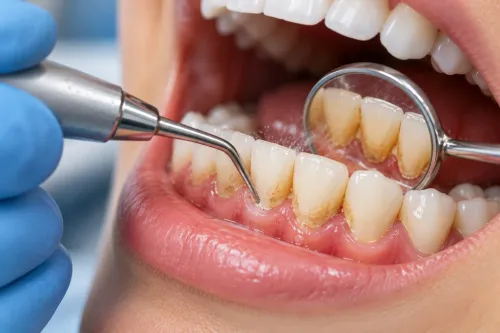
Once plaque hardens into calculus, also called tartar, polishing paste cannot reliably break its firm bond to the tooth. The paste is mildly abrasive; it smooths and lifts soft deposits and surface stain, while dental scaling uses hand instruments or an ultrasonic tip to fracture and remove hardened mineralized plaque biofilm.
1. The clinician scales first to remove calculus from the tooth surface and along the gumline. Leaving these ledges in place can hide the enamel underneath and block access to nearby plaque.
2. Scaling also clears heavier soft deposits that would otherwise spread through the polishing paste or clog the working surface. A polisher cannot substitute for the focused pressure and vibration used to detach tartar.
3. After scaling, small traces of stain or soft debris may remain in pits, grooves, rough areas and other irregular surfaces. Polishing is more effective at this stage because the deposits that blocked contact have already been removed.
The order protects the purpose of each procedure: scaling removes what is firmly attached, and polishing refines the exposed surface. Trying to polish first wastes time on deposits the paste cannot remove and can leave calculus behind even though the teeth feel smoother.
What polishing removes—and what it leaves behind
Thin, loose plaque film, soft debris, and surface stains respond to teeth polishing. Polishing does not reliably remove firmly attached calculus or change the internal colour of a tooth.
| Material | What polishing does | What remains |
|---|---|---|
| Soft plaque and debris | Removes small residual amounts left in pits, grooves, and along the gumline | Heavy or adherent plaque needs thorough cleaning and home care |
| Calculus | Cannot break down bonded tartar; polishing paste slides over it | Calculus requires scaling with hand instruments or an ultrasonic scaler |
| Extrinsic stain | Removes many external stains from coffee, tea, tobacco, and coloured foods | Deeply bonded or rough deposits may need further treatment |
| Intrinsic tooth discoloration | Does not alter dentin colour or internal staining from ageing, trauma, fluorosis, or medication | Whitening or other dental treatment is needed when appropriate |
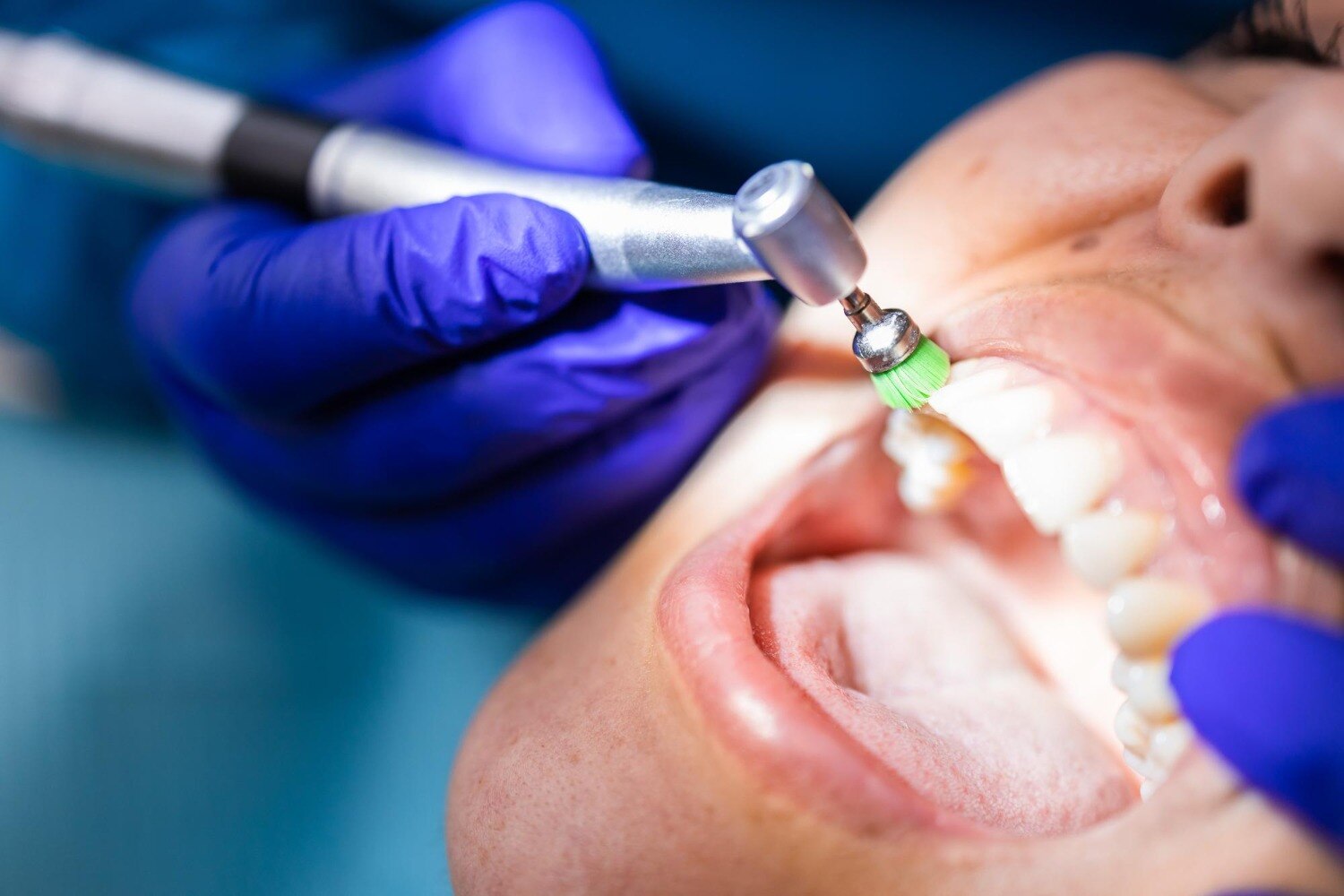
A rotating rubber cup or brush applies prophylaxis paste to selected surfaces after scaling. The paste can lift the final film of debris and stain, leaving teeth smoother and cleaner-feeling, but it is not a bleaching agent and cannot substitute for calculus removal.
Polishing also removes a small amount of tooth material. Excessive pressure, long treatment time, or highly abrasive paste can worsen wear on enamel or exposed root surfaces, so polishing is best limited to surfaces with visible stain or remaining soft deposits.
What the cleaning appointment feels like after scaling
Expect a low, rapid vibration as the clinician polishes each surface. Rubber cup polishing uses a small spinning cup with prophylaxis paste; a rotating brush may be used for grooves, between teeth, or areas the cup cannot reach. The pressure should feel firm enough to clean but not painful or forceful.
A water spray may cool the instrument and keep paste from building up. Dental suction removes water, saliva, paste and loosened debris, so you can breathe and swallow without managing a mouthful of fluid. You may feel the clinician pause, reposition your cheek or tongue, and work carefully along the gumline.
A small amount of bleeding can occur when recently scaled, inflamed gums are touched, especially around the gumline. Tell the clinician if the pressure hurts, bleeding is heavy, or a sharp spot remains.
Scaling can leave temporary roughness or sensitivity as inflamed gums settle and previously covered root surfaces become exposed; repeated polishing is not the solution to persistent symptoms.
The clinician will rinse away the remaining paste, and you may be asked to swish before spitting. Your teeth should feel smoother, not scraped thin. If sensitivity continues beyond the appointment or a rough area catches your tongue, arrange an assessment rather than requesting more abrasive polishing.
Why the clinician may polish only selected surfaces
Selective polishing is safer because abrasive paste and instruments remove a small amount of tooth material along with stain. If scaling leaves a surface clean, polishing it adds exposure without a cleaning benefit. Repeated unnecessary polishing can contribute to enamel wear, particularly where the tooth already has thinning, abrasion or erosion.
The clinician may polish only teeth or surfaces with visible stain or deposits that scaling has not removed, such as:
- The front surfaces marked by coffee, tea or tobacco stain
- Areas beside orthodontic brackets or tight contacts where residue remains
- The gumline where a thin stain film persists after calculus removal
The material and technique must match the surface. Exposed roots need extra care because dentin and cementum are softer than enamel; aggressive polishing can increase sensitivity or remove root structure. A person with gum recession has more of these vulnerable areas.
Composite restorations, glass ionomer, implant components and exposed dentin also require an appropriate paste or air-polishing powder, since a product suitable for natural enamel can roughen or damage another material.
Pressure, polishing time and paste abrasivity all matter. Persistent sensitivity or a sharp spot after cleaning is a reason to have the area assessed, not a reason to keep polishing it.
How polishing differs from whitening and ongoing prevention
Routine prophylaxis polishing can make teeth look cleaner, not fundamentally whiter. It removes extrinsic stain—surface discoloration from coffee, tea, tobacco and foods—along with residual soft deposits after scaling. It does not change dentin’s natural colour or remove most intrinsic discoloration.
That distinction matters if you want a lighter shade. Cosmetic whitening uses peroxide-based bleaching materials to alter tooth colour; polishing does not. Air polishing can remove biofilm and stubborn external stain efficiently, but sodium-bicarbonate powder adds sodium and the powder and nozzle must suit the site.
An abrasive safe on enamel may damage composite, glass ionomer, exposed dentin or implant components. PRYSM DENTAL STUDIO should select the paste or powder after checking those surfaces, rather than treating every tooth automatically.
Polishing is not itself a fluoride treatment. A fluoride-containing paste does not replace a separately applied fluoride varnish or gel when that preventive step is indicated. After the visit, protect the result by brushing twice daily with fluoride toothpaste, cleaning between teeth, limiting frequent sugary or acidic drinks, and avoiding tobacco.
Between appointments, daily plaque control matters more than repeated polishing. Ask for technique advice if bleeding persists, because polishing visible crowns cannot remove deposits deep in periodontal pockets or treat root-surface inflammation associated with periodontitis.
Routine polishing also need not happen at every preventive visit; polish surfaces with stain or deposits that scaling and brushing have not cleared.
Frequently asked questions
Why is scaling performed before polishing?
Hardened calculus has a firm bond to the tooth, so polishing paste cannot reliably remove it. Scaling breaks and removes the mineralized plaque first.
What does dental polishing remove?
Polishing removes soft plaque residue and some surface stains with mildly abrasive paste. It does not remove hardened tartar or change the tooth’s natural colour like whitening.
What does a cleaning appointment feel like after scaling?
After scaling, polishing usually feels smoother and less intense. You may notice a rotating tool, paste, water spray, vibration, or brief sensitivity.
Why might the clinician polish only selected tooth surfaces?
The clinician may target surfaces with remaining plaque or stain and avoid unnecessary abrasion on clean, sensitive, rough, or vulnerable areas.
How is polishing different from whitening and prevention?
Polishing removes surface deposits and stains; whitening changes tooth colour with bleaching agents. Brushing, cleaning between teeth, fluoride, and professional reviews help prevent new buildup.