Plaque is a soft bacterial film that daily brushing can disrupt, while tartar is mineralized buildup that clings to the tooth and requires professional instruments. By the end, you will know which signs point to scaling, how a clinician checks for deposits below the gumline, what the appointment feels like, and when one visit is unlikely to be enough.
Key takeaways
- Brushing cannot remove tartar once plaque has hardened.
- Bleeding gums, rough deposits, and bad breath can signal a need for scaling.
- A dentist checks calculus above and below the gumline before choosing treatment.
- Root planing is used when calculus and infection extend beneath the gums.
How Plaque Turns Into Tartar That Brushing Cannot Remove
Dental plaque is a soft, sticky film containing bacteria that forms on teeth throughout the day. Brushing at the gumline and cleaning between teeth disrupt it before it causes trouble. If it remains in place, minerals in saliva harden it into tartar, also called calculus.
Hardened tartar bonds to enamel and can extend below the gumline; a toothbrush cannot remove tartar once it is firmly attached.
| Type | What it is | What removes it |
|---|---|---|
| Dental plaque | Soft bacterial film that can be brushed away | Toothbrush, fluoride toothpaste, and interdental cleaning |
| Hardened tartar or calculus | Mineralised plaque fixed to the tooth surface | Professional instruments or an ultrasonic scaler |
| Surface stain | Colour from tea, coffee, tobacco, or smoking on the outer tooth surface | Professional polishing after the cause is assessed |
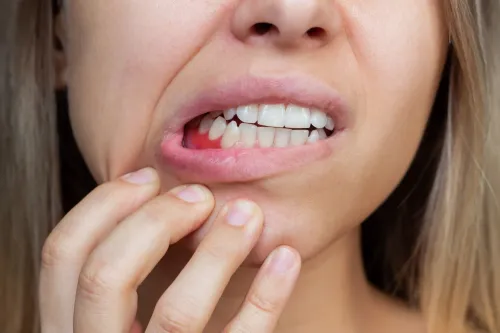
Professional scaling becomes necessary when a clinician finds calculus above or below the gumline. Yellow or brown deposits that feel rough, bleeding during brushing, swollen or tender gums, and persistent bad breath support an examination, but colour alone cannot confirm tartar. Bleeding usually reflects inflammation, so do not stop gentle daily cleaning.
Removing plaque and calculus can control gingivitis, which causes red, swollen, or bleeding gums. Periodontitis is more serious: loss of gum attachment or supporting bone requires periodontal assessment, not simply polishing visible surfaces. Scaling removes deposits; root planing is a deeper treatment for calculus and contaminated root surfaces inside periodontal pockets.
Signs That Point to Scaling Rather Than Simple Surface-Stain Removal
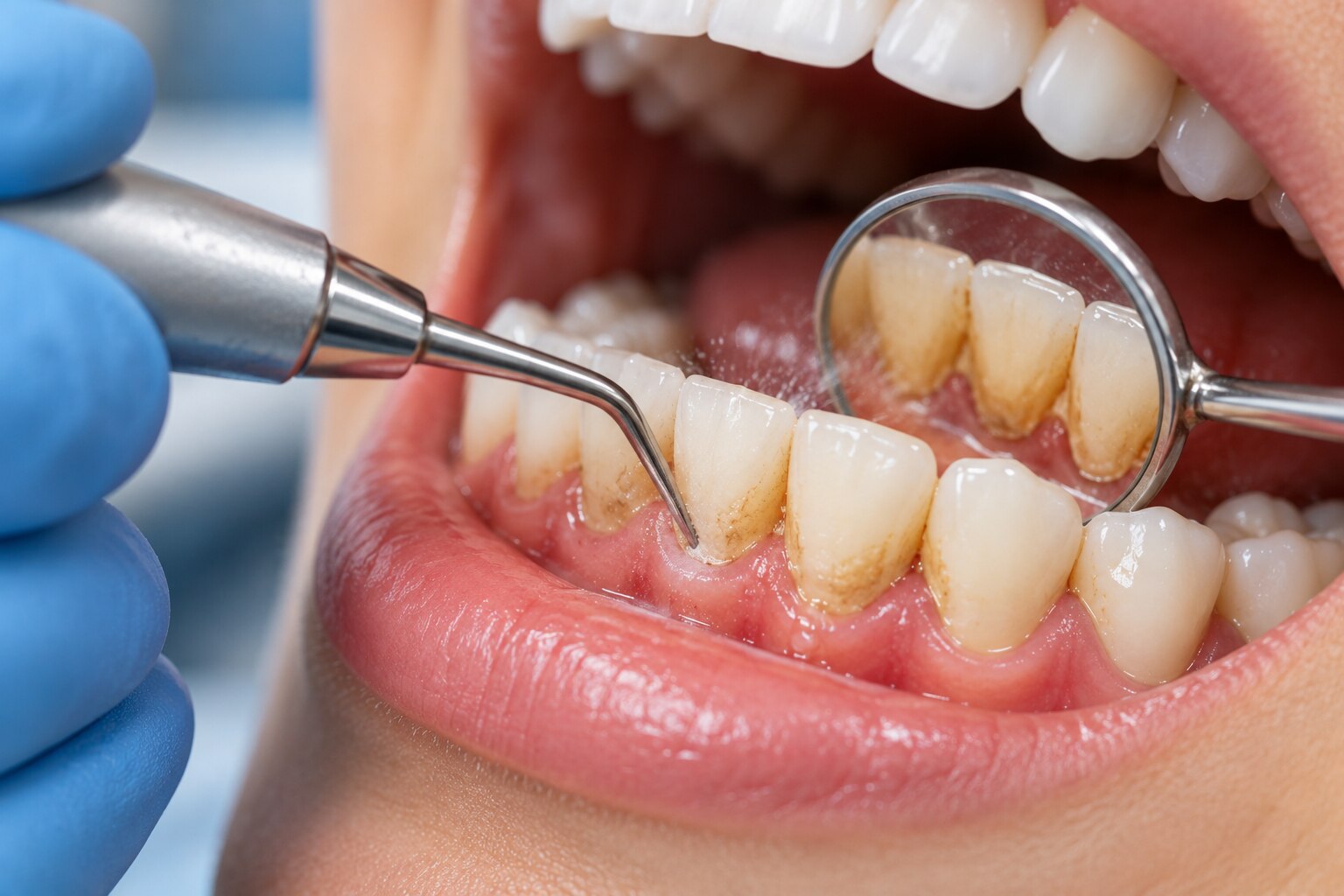
Yellow deposits along gumline, brown tartar, and rough tooth surfaces point to calculus rather than a simple stain. Calculus feels like a hard ridge or crust attached to the tooth; brushing and flossing may remove nearby plaque but will not lift the deposit.
| Sign | More consistent with calculus | More consistent with surface stain |
|---|---|---|
| Texture | Raised, gritty, crusty, or sharply uneven | Flat discoloration on otherwise smooth enamel |
| Location | Concentrated where teeth meet the gums, including behind lower front teeth | Spread across exposed surfaces or in grooves |
| Response to cleaning | Stays fixed despite careful brushing and flossing | Fades with professional polishing when it is tea, coffee, tobacco, or smoking stain |
| Gum reaction | Bleeding, redness, swelling, or tenderness beside the deposit | Usually no local gum inflammation from the colour alone |
Persistent bad breath strengthens the case for an examination but does not prove calculus. Tongue coating, dry mouth, decay, tobacco use, and gum disease can also cause it. Stains and calculus can appear together, so brighter-looking teeth after cleaning do not mean the enamel was whitened.
Scaling removes attached deposits and helps restore a smoother surface; it does not change the tooth’s intrinsic colour. If a deposit is hard, fixed, or extends under the gum edge, polishing alone is not the appropriate treatment.
How a Dentist Checks for Calculus Above and Below the Gumline
A clinician confirms calculus by seeing and feeling a hard, fixed deposit on the tooth. An examination mirror provides visibility, while compressed air dries the surface and makes rough, chalky or yellow-brown deposits easier to distinguish from soft plaque. Calculus will not wipe away with gauze.
A periodontal probe checks what the eye cannot. The clinician gently measures the space between each tooth and gum, records pocket depth, and notes bleeding, tenderness, root irregularities or a deposit beneath the gumline. Dental radiographs help assess bone levels and can reveal larger subgingival deposits, although small deposits may not appear clearly.
The findings determine whether treatment stays at the tooth surface or moves into periodontal care:
| Assessment | What it indicates | Likely treatment |
|---|---|---|
| Visible calculus above the gumline with shallow pockets | Deposits are accessible and supporting tissues show no significant breakdown | Routine scaling, followed by daily plaque control |
| Calculus below the gumline with deeper pockets or bleeding on probing | Inflammation and deposits extend into a periodontal pocket | Scaling and root planing, which cleans the root surface below the gumline |
| Persistent deep pockets, attachment loss, tooth mobility or radiographic bone loss | Periodontitis has affected supporting tissues | Periodontal evaluation, deeper treatment and scheduled maintenance |
Bleeding during probing does not prove that every deposit has been removed. Reassessment confirms whether pockets have improved; a smooth-looking tooth alone cannot rule out disease.
What Scaling Feels Like and What Determines Appointment Time
Ultrasonic scaling uses vibrating metal tips to break calculus from the tooth while a water spray cools the tip and washes away loosened debris. The instrument does not cut the tooth, but the vibration can feel intense around sensitive areas and sound sharper near the ear.
Hand scalers provide a controlled scraping sensation as the clinician removes deposits the ultrasonic tip cannot reach easily. Routine scaling often needs no anaesthetic; deeper cleaning or marked sensitivity may require numbing.
You may notice:
- Cool water, suction and occasional splashing
- Vibration, tapping or pressure on individual teeth
- Scraping sounds, mild gum tenderness or brief bleeding
Bleeding commonly reflects inflamed gum tissue, not damage caused by cleaning. Do not stop gentle brushing and interdental cleaning afterward; persistent or severe pain needs assessment.
A small amount of accessible calculus can fit into one visit. Treatment takes longer or requires separate appointments when:
- Deposits cover many teeth or extend below the gumline
- Inflamed or sensitive gums make continuous treatment uncomfortable
- Tight spaces, crowded teeth or a strong gag reflex limit access
- Deeper periodontal treatment is needed instead of routine surface scaling
The clinician may divide treatment by areas of the mouth so each appointment remains tolerable and each surface receives adequate attention. A follow-up visit can also confirm that deposits were removed and show whether further periodontal care is necessary.
How to Decide Whether You Need Scaling, Root Planing, or Ongoing Maintenance
After deposits are removed, the next step is reassessment—not an automatic six-month booking. Gingivitis usually improves when plaque control is restored; periodontitis requires evaluation for attachment loss and supporting-bone damage.
Use this sequence to choose the next step:
1. Recheck pocket depths, bleeding on probing, gum attachment levels, tooth mobility, and radiographic bone levels after healing. Persistent deep pockets or bleeding point to disease that a clean surface has not eliminated.
2. Choose root planing when subgingival calculus and contaminated root-surface deposits remain inside periodontal pockets. Root planing does not cure periodontitis by itself; it requires reassessment and continuing periodontal maintenance.
3. Set the maintenance interval from disease status, calculus buildup, smoking, diabetes, home-care ability, and treatment response. Treated periodontitis commonly needs closer reviews than low-risk gingivitis, while a fixed six-month interval is not an evidence-based rule for every adult.
4. Adjust the plan when follow-up shows renewed deposits, inflammation, pocket changes, or worsening mobility. Stable gums and clean home-care results support a longer interval; deterioration calls for earlier review or periodontal treatment.
Temporary tenderness and exposed-root sensitivity after scaling or root planing are common, especially with gum recession. Gum bleeding after scaling should lessen as inflammation settles; severe or persistent pain, bleeding, or sensitivity needs evaluation.
At PRYSM DENTAL STUDIO, ask for your pocket-depth and bleeding findings so the recall plan reflects your measured risk rather than a generic cleaning schedule.
Related service
Best Scaling & Polishing Treatment in Deccan Gymkhana, Pune | Dr. View service → |
Frequently asked questions
How does plaque turn into tartar?
Plaque is a soft bacterial film that forms on teeth. Minerals in saliva harden plaque into tartar, also called calculus, which brushing cannot remove.
What signs suggest I need dental scaling?
Bleeding during brushing, rough deposits near the gumline, persistent bad breath, gum swelling, and visible yellow or brown buildup point to tartar that needs professional removal rather than surface-stain polishing.
How does a dentist check for calculus below the gumline?
The dentist examines the teeth and gums visually and uses a dental probe to check pocket depth and deposits around and beneath the gumline. Dental X-rays can reveal bone loss when gum disease is suspected.
What does dental scaling feel like, and how long does it take?
Scaling can feel like pressure, vibration, scraping, and brief sensitivity. Appointment time depends on the amount of tartar, the number of teeth treated, gum sensitivity, and whether deposits extend below the gumline.
What is the difference between scaling and root planing?
Scaling removes plaque and tartar from tooth surfaces above and below the gumline. Root planing smooths contaminated root surfaces after deeper gum pockets contain calculus and inflammation.