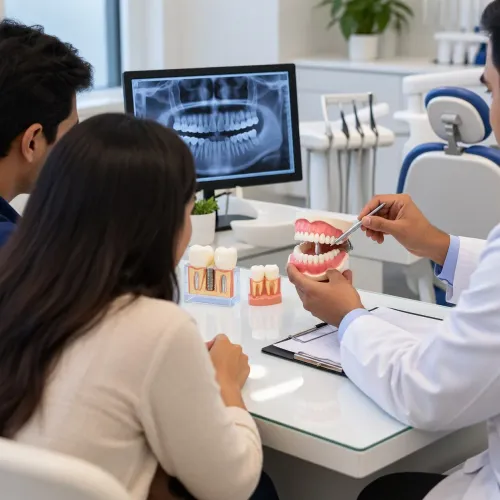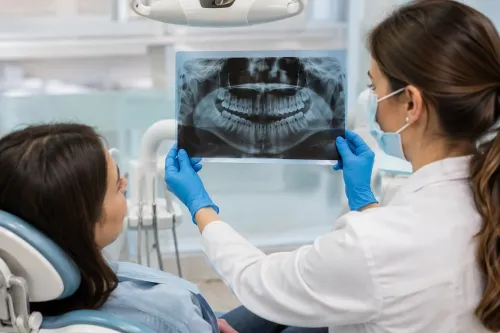
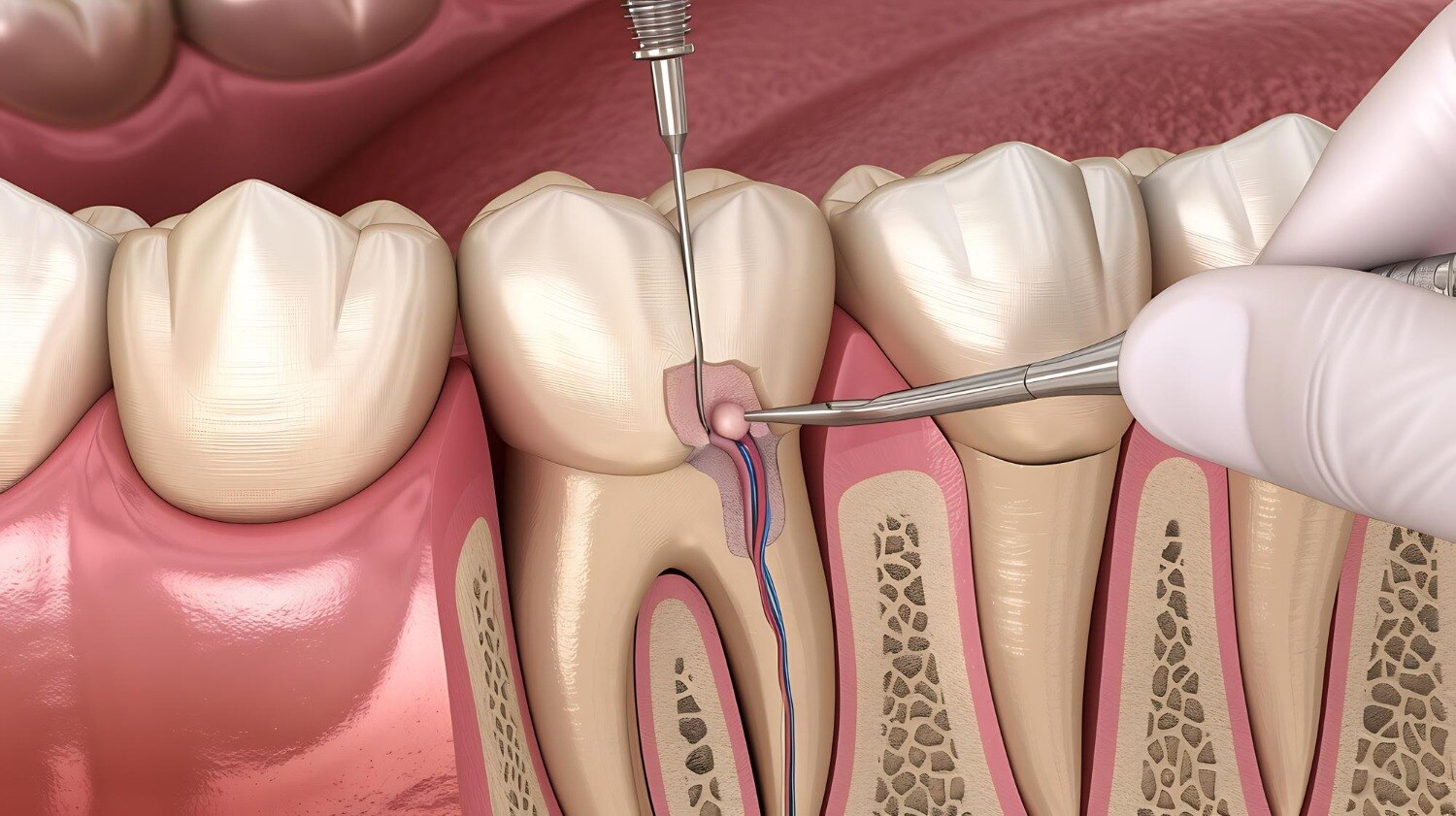
An infected tooth needs the right level of care, not simply the fastest appointment or another course of pain medicine. You will learn how to recognise an emergency, identify cases that merit an endodontic opinion, prepare for the diagnostic consultation, and judge whether saving the tooth is more predictable than removing and replacing it.
Key takeaways
- Seek emergency care for breathing trouble, swallowing difficulty, or rapidly spreading neck swelling.
- Ask about an endodontist referral for complex canals, cracked teeth, or previous failed treatment.
- Compare 3D imaging, treatment steps, fees, restoration plans, and follow-up care.
- Extraction may be necessary when the tooth cannot be restored or supported by healthy bone.
Does the infection need emergency care or a specialist appointment?
An infected tooth needs same-day emergency assessment when swelling is spreading or illness affects more than the tooth. Go to an emergency department immediately for difficulty breathing or swallowing, rapidly increasing neck swelling, confusion, or inability to open your mouth normally. These signs can indicate infection spreading into deeper tissues.
Seek same-day dental or medical assessment for:
- Rapidly increasing facial swelling, especially around the eye, jaw, or cheek
- Fever, chills, or marked weakness with tooth pain or swelling
- Pus, a foul taste, or swelling that is worsening despite pain relief
- A severe urgent dental infection in someone with significant medical conditions or reduced immunity
If you have localized pain without these warning signs, arrange prompt dental care rather than waiting weeks for a routine root canal specialist appointment. A specialist consultation is valuable when the diagnosis is uncertain, because cracked teeth, gum disease, sinus problems, jaw-muscle pain, and nerve conditions can imitate an infected tooth.
Treating the wrong tooth will not solve the pain.
Painkillers can hide symptoms without removing infection. Antibiotics alone do not remove infected pulp; definitive care requires drainage, root canal treatment, or extraction. Ask whether the proposed treatment includes a durable final seal or crown, because leakage after treatment can allow reinfection.
Which teeth justify referral to an endodontist?
Referral is safer when a tooth’s anatomy, treatment history, or injury makes locating, cleaning, or sealing the canals unusually difficult. A root canal specialist, or endodontist, has advanced training in diagnosing pulp disease, treating complex canals, and managing complications.
| Trigger | Why referral helps | What must be assessed |
|---|---|---|
| Calcified canal or narrow canal | Magnification, specialised instruments, and three-dimensional imaging can reduce the risk of missing the canal or perforating the root. | Whether the canal is negotiable and the remaining tooth structure is strong enough |
| Complex molar, rotated tooth, or unusual roots | Extra roots, sharply curved canals, or poor isolation increase the chance of incomplete cleaning. | Canal number, curvature, access, and the quality of the seal |
| Previous root canal, separated instrument, post, ledge, or perforation | Retreatment can require removing obstructing material without weakening the tooth or creating a larger defect. | Whether retreatment offers more benefit than extraction and replacement |
| Trauma, resorption, suspected root fracture, or developmental anomaly | Injury can alter the pulp, root shape, or surrounding bone and make the diagnosis uncertain. | Fracture, resorption, periodontal support, and restorability |
| Unclear source of pain | A cracked tooth, sinus disease, muscle pain, or nerve disorder will not improve after treating the wrong tooth. | Whether the symptoms actually originate inside the tooth |
Ask for referral when the tooth has failed root-canal treatment more than once or its long-term restorability is doubtful. Endodontic treatment cannot overcome a vertical root fracture, deep subgingival fracture, severe bone support loss, or insufficient remaining structure.
Plan the final crown or other cuspal-coverage restoration at the same time, because leakage or delay after treatment can allow reinfection or fracture.
What will the specialist check before recommending treatment?
A specialist first determines whether the tooth itself is causing the pain and whether root canal treatment can remove that cause. Treating the wrong tooth will not fix a crack, gum disease, sinus problem, jaw-muscle pain, or a non-dental nerve condition.
1. Review your history. The specialist asks when pain began, what triggers it, whether it lingers after hot or cold drinks, and whether previous root canal treatment, crowns, trauma, or biting problems are involved.
2. Test the tooth and its neighbours. Pulp vitality testing assesses whether the nerve responds normally. A percussion test checks tenderness when the tooth is tapped, while a bite test looks for pain released from a cracked cusp or root.
3. Examine the supporting tissues. Periodontal probing measures pocket depths around each tooth; one narrow, deep pocket can point toward a root fracture. The specialist also checks mobility, swelling, draining areas, cracks, and the quality of existing fillings or crowns.
4. Match the findings with images. Dental radiographs show bone loss, hidden canals, previous filling gaps, and changes around the root tip. Three-dimensional cone-beam computed tomography can clarify complex anatomy, suspected fractures, perforations, or persistent disease when two-dimensional images do not explain the symptoms.
5. Assess whether treatment can preserve the tooth. Insufficient remaining structure, severe bone loss, a deep fracture, or a vertical root fracture can make root canal treatment the wrong solution. The specialist then compares retreatment, surgery, restoration, or extraction based on the actual diagnosis.
What should you compare before choosing a root canal provider?
A well-planned service explains what will happen before you consent, not just the fee. Compare the provider’s diagnostic process, experience with difficult anatomy, appointment timing, restoration plan, and method for checking healing.
| Compare | Stronger plan | Warning sign |
|---|---|---|
| Diagnosis | Examination and two-dimensional radiographs; cone-beam computed tomography only when suspected fractures, resorption, complex canals, or nonhealing disease require extra detail | A scan ordered routinely, or treatment recommended without explaining the diagnosis |
| Technical care | Rubber dam isolation, dental magnification, measured working length, and thorough root canal irrigation | No clear explanation of isolation, magnification, canal cleaning, or how separated instruments and calcified canals are managed |
| Experience | Documented training and regular treatment of molars, retreatments, perforations, and unusual canal anatomy | A provider cannot describe experience with your tooth’s specific difficulty |
| Scheduling | Enough time for diagnosis and treatment, with urgent review arranged for worsening swelling, fever, or swallowing difficulty | A rushed appointment that leaves the infected tooth temporarily unmanaged |
| Restoration | A named plan for the permanent filling, crown, or other cuspal-coverage restoration and who will provide it | Root filling presented as the complete treatment |
| Follow-up | Written instructions, review of symptoms and the restoration seal, and imaging when healing needs assessment | No review plan after treatment |
At PRYSM DENTAL STUDIO, ask these questions during the consultation so the proposed root canal, final restoration, and follow-up form one plan rather than three disconnected appointments. Persistent pain also deserves reassessment, not automatic extraction.
Related service
Best Root Canal Treatment Specialist in Deccan Gymkhana, Shivajinagar, Pune | Prysm Dental Studio by Dr. View service → |
When is root canal treatment unlikely to save the tooth?
Extraction and replacement become more predictable when the tooth cannot provide a stable foundation after infection is removed. Root canal treatment can disinfect canals, but it cannot rebuild missing walls, repair a vertical root fracture, or restore lost periodontal support.
| Finding | Why attempting treatment is a poor bet | More predictable direction |
|---|---|---|
| Insufficient remaining tooth structure | The tooth cannot hold a seal or resist chewing forces | Extraction and replacement |
| Crack extending below the gum line | Bacteria can enter the fracture and the margin cannot be sealed reliably | Extraction and replacement |
| Severe periodontal support loss | The tooth lacks enough bone and attachment to remain stable | Extraction and replacement |
| Vertical root fracture | The fracture splits the root and cannot be sealed from inside the canal | Extraction and replacement |
| High-risk retreatment anatomy | Removing a post or separated instrument could weaken the tooth or cause perforation | Compare retreatment risks with extraction |
Ask whether tooth restorability is adequate before consenting to treatment. A deep subgingival fracture, loose tooth, or inadequate structure can make a technically successful root canal a short-term solution rather than a tooth-saving one.
A restorable tooth also needs a durable coronal seal and, where indicated, a definitive crown or other cuspal-coverage restoration. Leakage or delay can permit reinfection or fracture. Persistent pain or a lesion after treatment does not automatically require extraction; missed canals, leakage, or a non-endodontic diagnosis may be correctable.
Extraction becomes the clearer choice when evaluation confirms an unrestorable fracture or no durable restoration is possible.
Frequently asked questions
Does an infected tooth need emergency care or a specialist appointment?
Get same-day emergency assessment when swelling is spreading or illness extends beyond the tooth. Go to an emergency department for difficulty breathing or swallowing, rapidly increasing neck swelling, confusion, or inability to open your mouth normally. Less severe symptoms can be assessed through a dentist or root canal specialist appointment.
Which teeth justify referral to an endodontist?
Referral is useful for teeth with narrow, curved, or multiple canals, difficult rear-tooth access, suspected cracks, unusual anatomy, or root canal treatment that has failed or needs retreatment.
What will a root canal specialist check before recommending treatment?
The specialist will assess your symptoms, bite, gum and tooth support, visible cracks, restorability, and X-rays. When standard images do not show enough detail, the specialist may recommend a limited-field 3D scan before deciding between root canal treatment, monitoring, or extraction.
What should you compare before choosing a root canal provider?
Compare the provider's experience with your tooth's complexity, diagnostic imaging, treatment plan, isolation and infection-control methods, fee breakdown, restoration plan, emergency access, and follow-up arrangements.
When is root canal treatment unlikely to save the tooth?
Root canal treatment is unlikely to save a tooth when a crack extends below the gum line, too little tooth remains for a secure restoration, the tooth cannot be adequately cleaned and sealed, or supporting bone and gum damage make the tooth unstable.