The right dental clinic is not simply the one with the shortest wait or lowest quoted fee. Before treatment, you need to verify the dentist, understand the diagnosis and alternatives, inspect infection-control practices, and confirm what the price and follow-up care include.
Key takeaways
- Choose a reachable clinic offering appointments you can attend.
- Verify the dentist’s registration and experience with your procedure.
- Ask for the diagnosis, alternatives, risks, and written treatment plan.
- Confirm total costs, aftercare, and follow-up before consenting.
Start with access, appointment availability, and the clinic’s scope of care
Before booking, confirm that the clinic is reachable, can offer an appointment you can keep, and has the treatment scope your case requires.
1. Check the dental clinic location against your travel time, parking or public transport, accessibility needs, and likely number of visits. A distant clinic becomes impractical when treatment requires weekly adjustments or several follow-up appointments.
2. Ask about appointment availability, including the earliest consultation, typical waiting time, appointment length, and whether the same dentist will provide continuing care. A clinic that cannot schedule your examination and required reviews is not a good fit.
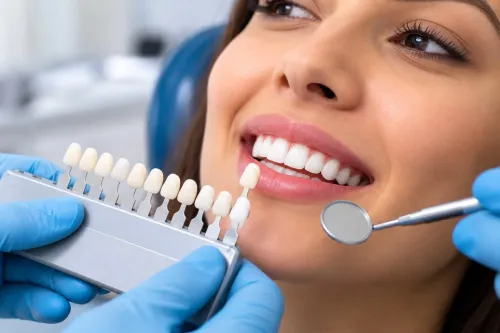
3. Match the treatment scope to your needs. Ask who performs the procedure, whether a formally trained specialist is involved, and whether the clinic handles imaging, orthodontics, pediatric care, oral surgery, or prosthodontic work in-house. For cosmetic treatment, ask about conservative alternatives, sensitivity risks, and limits on shade or shape changes.
4. Clarify emergency dental care before you need it. Ask who answers after hours, whether an on-call dentist assesses patients, and where to go for uncontrolled bleeding, facial swelling, trauma, or difficulty breathing or swallowing. Those symptoms can require emergency medical care, not a routine dental visit.
Ask how you will receive radiographs, records, and treatment information if you seek another opinion. Pressure to start immediately or difficulty releasing records is a practical warning sign.
Verify the dentist’s registration, training, and procedure-specific experience
A dentist’s basic degree is not proof of experience with the procedure you need. Before consenting, verify the clinician’s identity, current licence, training, and recent experience with that exact treatment.
1. Check the dentist’s qualifications and Dental Council of India registration. Confirm the registration number through the relevant state dental council or current official register, and look for restrictions or disciplinary action.
2. Ask whether the proposed treatment requires postgraduate dental training. A specialist dentist in orthodontics, prosthodontics, paediatric dentistry, periodontics, endodontics, or oral and maxillofacial surgery should be able to name the recognised programme and institution completed.
3. Ask who will perform each stage. A clinic may advertise specialist care while assigning an extraction, implant, root canal, aligner case, or complex restoration to another clinician. Get that person’s name, qualification, and role before treatment starts.
4. Ask how many similar procedures the treating dentist performs, how recently, and what happens if complications occur. For extensive or cosmetic work, request examples of treatment planning rather than relying on before-and-after photographs alone.
Be cautious if staff avoid direct answers, pressure you to begin immediately, or refuse to provide records and radiographs for a second opinion. A competent clinic should explain its limits and refer you to a specialist dentist when the case exceeds its training or equipment.
Confirm the diagnosis, alternatives, and treatment plan before consenting
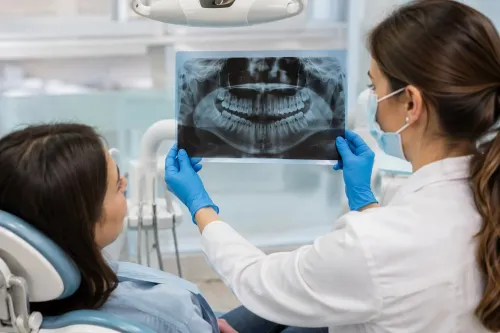
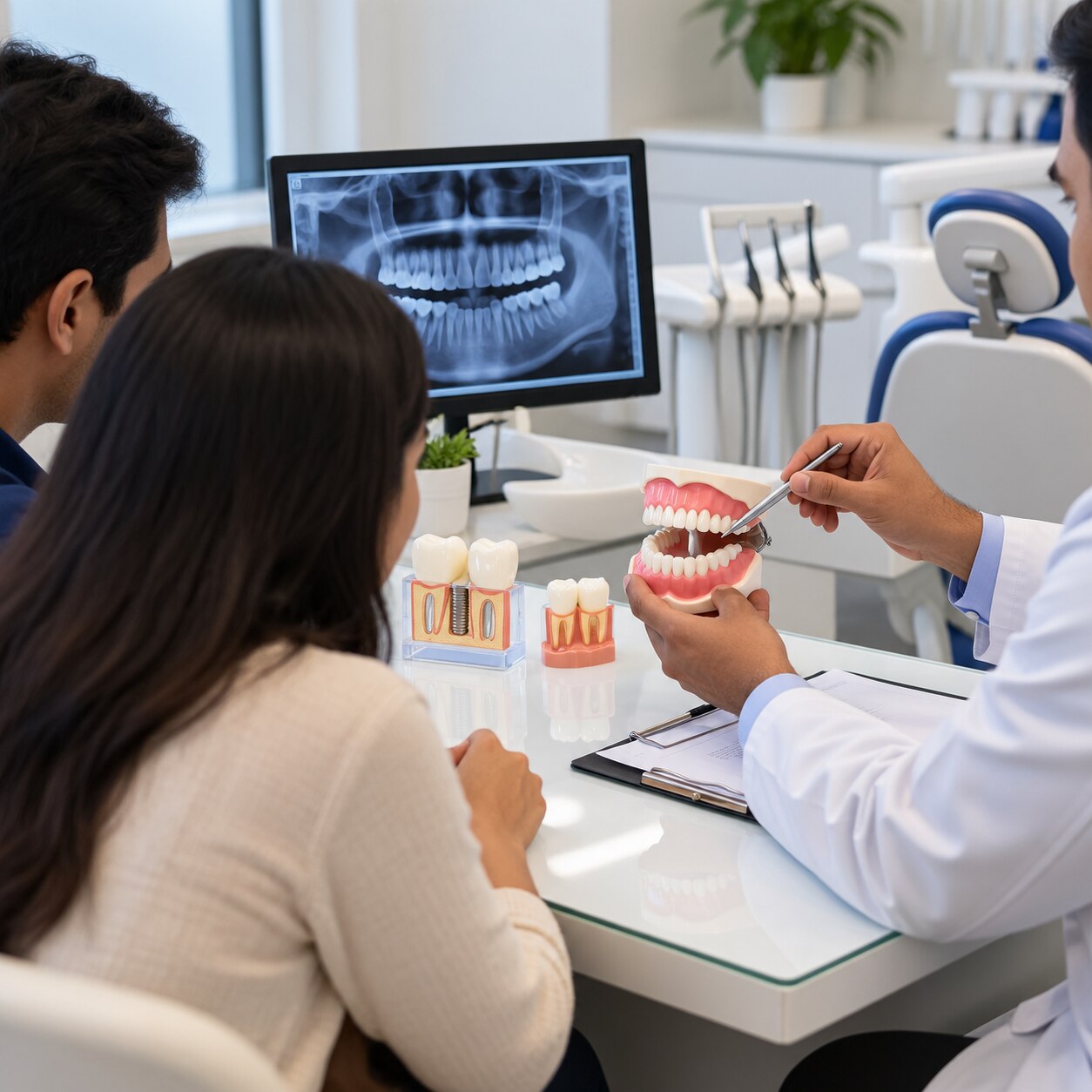
Do not consent until you can explain what problem exists and how the proposed treatment addresses it. A sound dental diagnosis links the recommendation to examination, symptoms, and appropriate evidence, such as bitewing radiographs for decay between teeth or an orthopantomogram for a broader view.
Ask which finding makes treatment necessary and what could happen if you wait.
Request a written treatment plan before extensive or irreversible work. It should state:
- The diagnosis, proposed procedure, expected benefit, and material risks.
- Conservative alternatives, including monitoring or no treatment.
- The likely number of visits, recovery needs, approximate total cost, and future maintenance.
- Which stages another dentist, specialist, laboratory, or surgeon will perform.
- For orthodontics, the treatment objective, diagnostic photographs, scans or models, radiographs, appliance limits, and management of broken appliances, lost retention, or root and gum problems.
Seek a second opinion before multiple crowns, extraction of a potentially restorable tooth, implant surgery, orthodontic treatment, or substantial cosmetic work. Give the second dentist your records and radiographs so unnecessary imaging is avoided. Difficulty obtaining copies or pressure to start immediately are warning signs.
For cosmetic work, weigh oral-health consequences against appearance. Ask about conservative options, whitening sensitivity, soft-tissue irritation, and the likelihood that restorations will need repair or replacement. Consent should follow a discussion, not merely a signature.
Inspect sterilisation, hygiene, equipment, and patient-safety practices
Look for a repeatable safety process, not just a spotless reception area. Ask how the clinic performs dental instrument sterilisation: reusable instruments must be cleaned before sterilisation, sealed in pouches, and processed in an autoclave.
Instrument-pouch indicator strips show whether each pack passed the chemical exposure check, but they do not prove the entire cycle worked.
Ask these questions during your visit:
- Are sterilisation cycles recorded and checked with mechanical, chemical, and biological indicators?
- Are instruments opened from sealed pouches beside you, or are disposable items used where appropriate?
- Do staff perform hand hygiene before treatment and change gloves between patients?
- Are masks, eye protection, and other personal protective equipment used for procedures that create spray or blood?
- Are the dental chair, light handles, and work surfaces disinfected between patients?
- Are needles and other sharps placed immediately into a rigid, labelled sharps container?
- Who handles urgent problems after hours, and where should you go for uncontrolled bleeding, facial swelling, trauma, or breathing difficulty?
- Are radiographs prescribed from your symptoms, examination, age, and previous images rather than automatically?
A clinic should explain its written cleaning, injection-safety, and steriliser-monitoring procedures without evasion. PRYSM DENTAL STUDIO, like any clinic you compare, should also identify the clinician performing your procedure and provide treatment records and radiographs if you seek another opinion. Pressure to start immediately is a warning sign.
Compare the full cost, responsibilities, and follow-up before treatment starts
A quote is comparable only when every clinic prices the same treatment, materials, visits, and responsibilities. Request an itemised dental estimate showing the written diagnosis, alternatives including no treatment, expected number of visits, expected benefits, material risks, and any part another clinician will perform.
Ask each clinic to state:
- Whether examination, X-rays or scans, temporary restorations, laboratory fees, local anaesthesia, sedation, and medicines are included
- Who pays for adjustments, repairs, replacement, or treatment of complications
- What follow-up dental care is included and what each later visit costs
- How the clinic provides emergency access after hours
| Compare this | Ask for | Why it matters |
|---|---|---|
| Examination and imaging | Named tests and fees | A low dental treatment cost may exclude diagnosis |
| Materials and laboratory work | Crown, denture, implant, or filling material and lab charge | Different designs and materials are not equivalent |
| Visits and anaesthesia | Number of appointments, temporary work, and sedation fees | Extra visits can erase an apparent saving |
| Aftercare | Adjustment, repair, relining, maintenance, and replacement prices | Prosthetic work needs care after fitting |
| Complications and urgent care | Written responsibility and emergency access | Uncontrolled bleeding, facial swelling, trauma, or breathing difficulty may need immediate assessment |
For extensive or invasive treatment, compare the total expected cost and the clinic’s aftercare commitment, not the promotional figure. A cheaper plan becomes expensive if repairs, follow-up dental care, or urgent treatment are left entirely to you.
Frequently asked questions
How do I compare a dental clinic’s access and scope of care?
Check the clinic’s location, appointment availability, emergency arrangements, and whether it provides the treatment and follow-up your case requires.
What should I verify about the dentist before treatment?
Confirm the dentist’s registration, professional training, and procedure-specific experience. Ask who will perform each part of your treatment.
What should a dentist explain before I consent?
Ask for the diagnosis, proposed procedure, alternatives, expected benefits, risks, likely duration, and a treatment plan you understand before consenting.
How can I compare dental treatment costs accurately?
Request an itemised estimate covering consultations, imaging, procedures, materials, medicines, adjustments, follow-up visits, and costs if treatment changes.