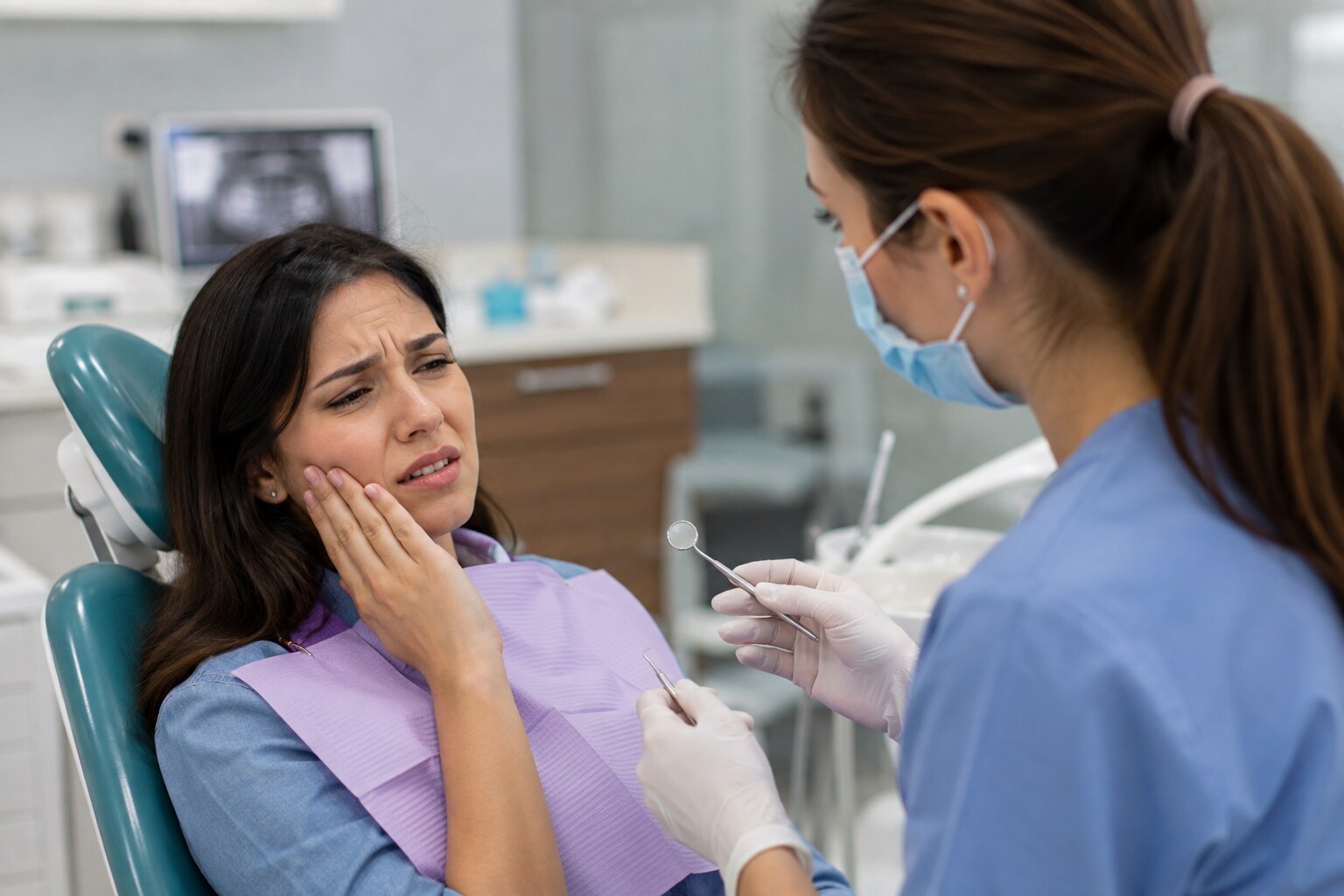
Brief discomfort from ice cream is different from pain that continues after the cold is gone, just as a spot of bleeding after learning to floss differs from gums that bleed without being touched. Use the timing, trigger, location and accompanying symptoms to decide whether to monitor briefly, book a prompt appointment or seek same-day emergency care.
Key takeaways
- Book a routine visit for recurring brief sensitivity after cold or sweet foods.
- Arrange an appointment for bleeding gums that recur during brushing or flossing.
- Seek same-day care for facial swelling, fever, severe pain, or uncontrolled bleeding.
- Rinse gently, avoid triggers, and do not place aspirin directly on the gum.
How to triage tooth sensitivity by its timing and trigger
The trigger and duration matter more than sensitivity alone. Brief sensitivity from cold or sweet foods that stops immediately after you remove the trigger usually fits a routine dental appointment, especially if it keeps recurring. An examination still matters because exposed dentine, worn enamel, gum recession and early decay can feel alike.
1. Book a routine dental appointment when brief pain occurs only with cold or sweet foods, settles immediately, and has no swelling or biting pain. Arrange an examination sooner if it began after whitening; stop the whitening product if sensitivity is severe or persists.
2. Book a prompt appointment when pain lingers after the trigger is removed, occurs spontaneously, starts with biting or releasing a bite, or wakes you at night. These patterns can involve an inflamed pulp, decay, a cracked tooth, a loose filling or grinding-related damage.
Do not cancel because the pain stopped; a dying pulp can become painless while infection continues.
3. Seek same-day emergency dental or medical care for sensitivity with facial or jaw swelling, fever, feeling unwell, swollen neck glands, a bad taste, or difficulty opening your mouth. Difficulty swallowing or breathing, rapidly increasing swelling, or swelling toward the eye or neck requires emergency services immediately.
A dental examination is the only reliable way to identify the cause.
What different sensitivity patterns can indicate
The trigger, duration and exact tooth provide useful clues, but they do not replace an examination.
| Pattern | What you may notice | What it can indicate |
|---|---|---|
| Exposed dentine | A sharp flash from cold, sweet or brushing that stops immediately | Dentine exposed by enamel loss or gum recession |
| Enamel wear | Several teeth feel sensitive, with flattened edges, thinning surfaces or small chips | Acid erosion, abrasive brushing or enamel wear from grinding |
| Gum recession | Sensitivity begins near the gumline, where a tooth looks longer or the root feels notched | Gum recession exposing the root and underlying dentine |
| Whitening sensitivity | Several teeth become briefly sensitive during or soon after whitening | Stop the product if sensitivity is severe or persists; decay, cracks or exposed roots need checking |
| Tooth decay sensitivity | One tooth reacts to sweet, cold or hot foods, and the pain can linger after the trigger is gone | Tooth decay sensitivity, especially when the area traps food |
| Cracked tooth | Sharp pain when biting, particularly when you release the bite; symptoms come and go | A crack, which may not appear on a standard X-ray |
| Loose filling | A rough or moving filling, food catching around it, or new sensitivity in that tooth | A leaking or displaced filling |
| Teeth grinding | Morning jaw soreness, headaches, flattened teeth or repeated chips | Night-time or daytime teeth grinding |
Book an assessment for spontaneous pain, night pain or pain that continues after hot or cold is removed. A dentist must test the tooth to separate reversible irritation from pulp inflammation.
When bleeding gums need an appointment
Bleeding while brushing or flossing is a reason to improve cleaning, not a normal sign that cleaning is working. Plaque-induced gingivitis commonly causes it, especially after missed brushing or flossing, and often improves with gentle daily plaque removal.
If bleeding began after a new flossing technique or after brushing too hard, use lighter pressure and guide floss against each tooth in a C-shape. Do not stop cleaning between the teeth; irritation from plaque can worsen when you avoid the area.
Book a routine appointment if bleeding continues after about one to two weeks of careful cleaning.
Arrange a prompt dental examination when gums bleed without provocation, bleed repeatedly despite better cleaning, or look persistently red, swollen or tender. Loose teeth, gum recession, pus, persistent bad breath or a change in how your teeth meet raises concern for periodontitis rather than simple gingivitis.
Use this timing guide:
- Book a routine appointment for bleeding that recurs during brushing or flossing and does not settle after improved technique.
- Book a prompt appointment for spontaneous bleeding, swollen gums, loose teeth or bleeding that continues despite consistent cleaning.
- Seek same-day care for heavy bleeding that will not stop with firm gauze pressure, or bleeding with facial swelling, fever, difficulty swallowing or difficulty breathing.
Which tooth pain and gum symptoms require same-day care
Arrange same-day dental or medical assessment for tooth pain with swelling, fever and malaise, a bad taste, pus, or swollen neck glands. These signs can indicate an abscess or infection spreading beyond the tooth.
| Symptom | What it may indicate | What to do |
|---|---|---|
| Facial swelling, rapidly increasing swelling, or swelling toward the eye or neck | Spreading dental infection | Seek emergency medical care now |
| Difficulty swallowing or breathing | Airway-threatening swelling | Call emergency services immediately |
| Difficulty opening the mouth with swelling or fever | Infection involving deeper tissues | Obtain same-day medical or dental assessment |
| Pain when biting, especially when releasing the bite | Cracked tooth, damaged pulp, or an abscess | Request same-day dental assessment |
| Spontaneous pain, night pain, or heat and cold pain that lingers | Inflamed or infected pulp | Arrange urgent dental care, not a routine check months away |
| Loose teeth, pus, persistent bad breath, drifting teeth, or a changed bite | Advanced gum disease or an abscess | Seek prompt dental assessment |
Children need prompt assessment for tooth pain, facial swelling, fever, refusal to eat, or difficulty sleeping. A primary tooth can develop a serious infection without a clear pain description, and waiting for it to fall out can harm the developing permanent tooth.
Antibiotics alone do not remove an abscess. The tooth usually needs drainage, root-canal treatment, or extraction; antibiotics serve as an adjunct when infection is spreading or causing systemic symptoms.
What to do before you reach the dentist
Keep the area clean while you arrange care. A sore tooth or bleeding gum is not a reason to stop brushing; plaque left behind can intensify inflammation and make bleeding persist.
- Use a soft-bristled toothbrush and gentle pressure twice daily. Do not scrub the painful spot or place aspirin directly on the gum.
- Clean between teeth once daily with floss or an interdental brush. If flossing triggers bleeding, continue gently unless a clinician tells you to stop.
- For acute pain, ibuprofen and acetaminophen can be used alone or together when safe for you. Check the label and ask a pharmacist before taking ibuprofen if you are pregnant, have kidney disease, ulcers, bleeding risk, or take anticoagulants; check acetaminophen first if you have liver disease or use medicines containing it.
- If a permanent tooth is knocked out, hold it by the crown, rinse visible dirt briefly, and replant it immediately if possible. Otherwise store it in milk or tooth-preservation solution and seek emergency care. Never replant a knocked-out primary tooth.
- Get urgent help for breathing or swallowing difficulty, rapidly increasing facial swelling, or swelling near the eye or neck.
Pain stopping does not prove the tooth has healed; a dying pulp can stop hurting while infection spreads. For a child, arrange prompt assessment for pain, swelling, fever, refusal to eat, or poor sleep. Tell PRYSM DENTAL STUDIO whether the injured tooth is primary or permanent, because that changes the next step.
Related services
Best Root Canal Treatment Specialist in Deccan Gymkhana, Shivajinagar, Pune | Prysm Dental Studio by Dr. View service → |
Best Dental Fillings Treatment in Deccan Gymkhana, Pune | Dr. View service → |
Frequently asked questions
When does tooth sensitivity need a dentist appointment?
Book a routine appointment when brief sensitivity keeps recurring, even if it stops after you remove the cold or sweet trigger.
What can different tooth sensitivity patterns indicate?
Sensitivity from cold, sweets, biting, or heat can relate to exposed dentine, worn enamel, gum recession, decay, or an inflamed tooth pulp. An examination distinguishes them.
When do bleeding gums need a dental appointment?
Arrange an appointment when gums bleed repeatedly during brushing or flossing, bleed without contact, or look swollen, red, or tender.
Which tooth pain and gum symptoms require same-day care?
Seek same-day dental care for severe or worsening pain, facial or gum swelling, fever, difficulty swallowing or breathing, a knocked-out tooth, or bleeding that will not stop.
What should you do before reaching the dentist?
Avoid the painful trigger, rinse gently with warm water, brush carefully, use a cold compress for swelling, and take only pain medicine you can safely use.
Related service
Dental Check-up & Consultation Best Dental Clinic for Dental Check-up & Consultation in Deccan Gymkhana, Pune – Prysm Dental Studio by Dr. View service → |